The Cobolt Calypso is a complex DPSS laser that is capable of producing 25-100 mW of 492nm laser light, depending on the model. It's a laser head that is typically paired with a controller. In this case, the unit belongs to our friend Patrick and we did not have the controller. Significant effort was put into building a custom controller for this system using mainly traditional, analog components. This particular head was likely damaged and fought him every step of the way during the repair. For a full and detailed overview of this laser, check out Patrick's video by following the link at the bottom of this page.
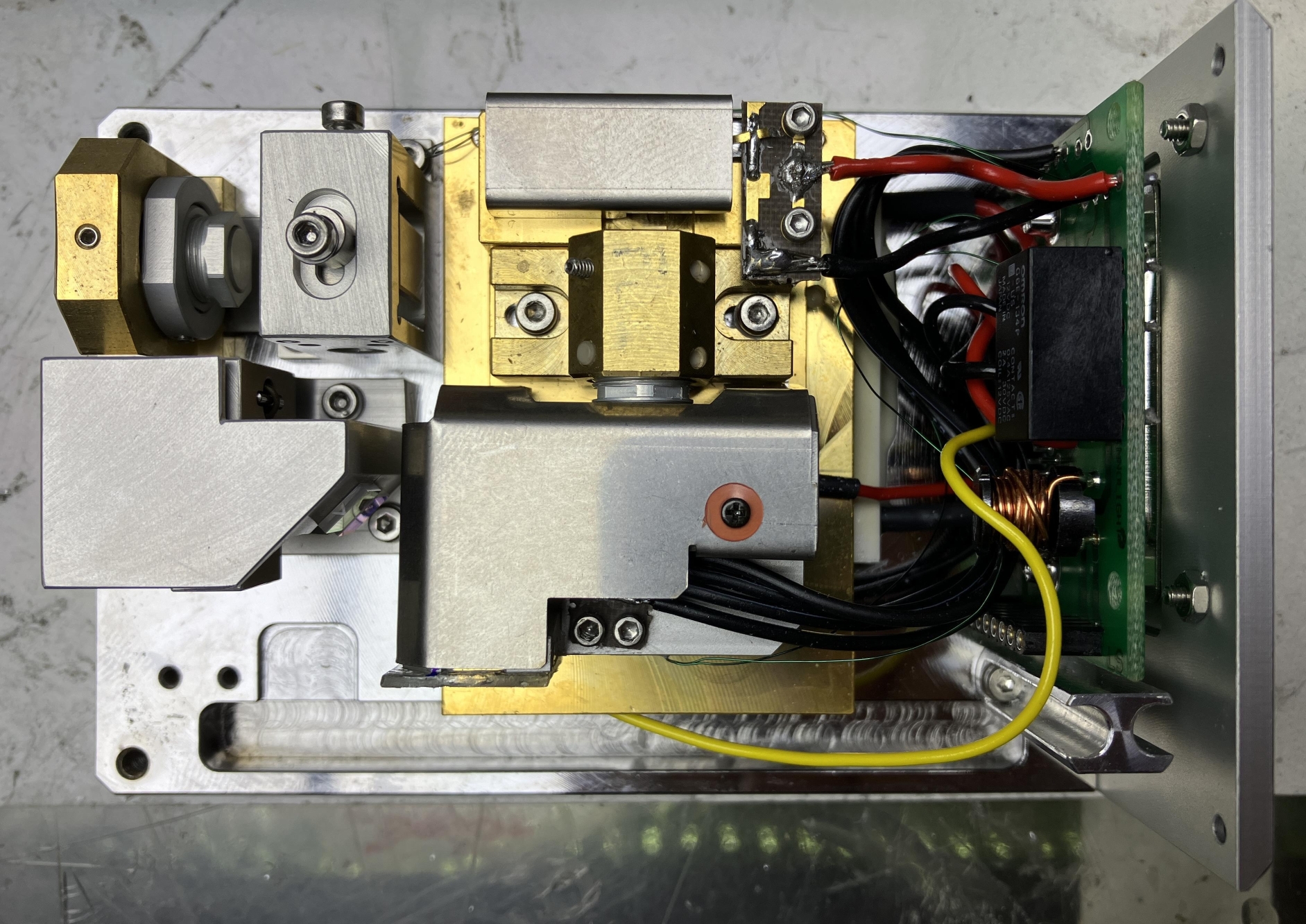
This PCB is mounted to the back of the enclosure and breaks out all the connections from the rear connector. On the board is a relay the shorts the pump diode when the laser head is unconnected or unpowered. This protects the pump diode from damage due to static electricity. The red and black wires on the left lead to a PCB to which the pump diode is connected to.
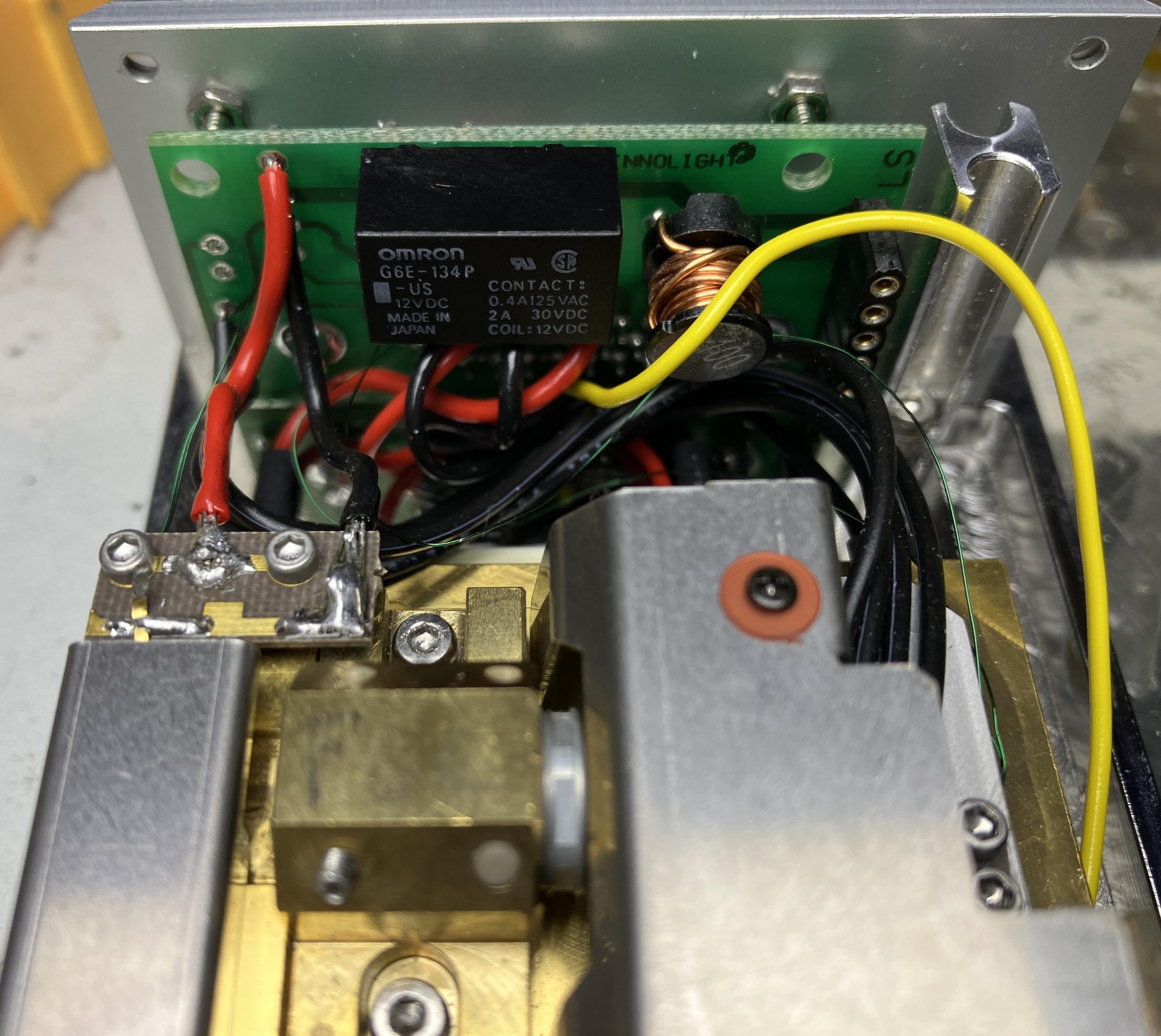
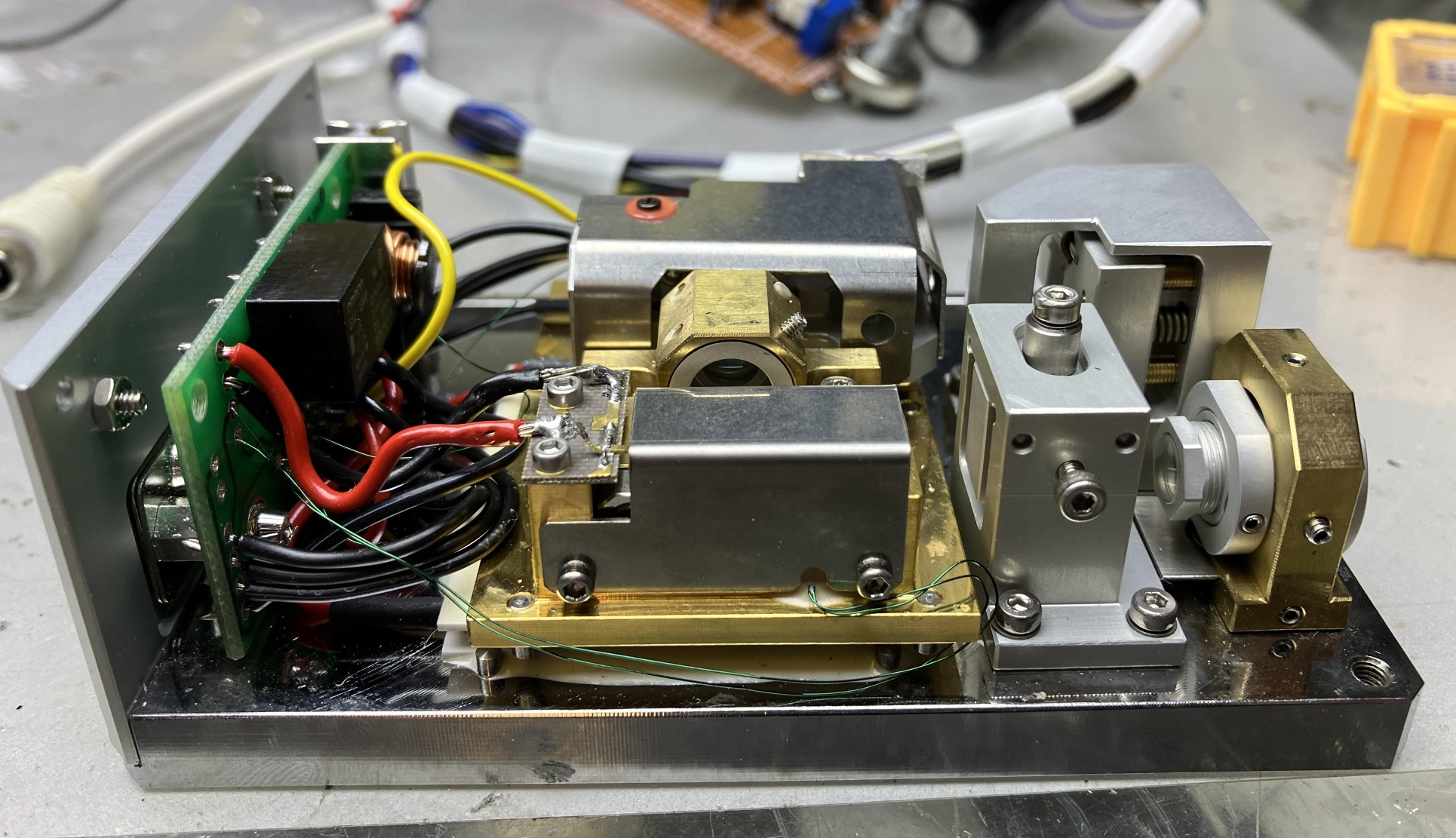
The enclosure is made from plated copper (most likely) and includes several individual mounts and carriers for all the optical components. For thermal control, there are actually three layers of TECs. The first TEC is the largest and sandwiched between the baseplate and the brass carrier, which contains the majority of the optical components including the pump diode. Cooling for the pump diode is provided by this first TEC. The next TEC is between the brass assembly and and the crystal mounting plate. It maintains the temperature of most of the sensitive optics, such as the Nd:YAG crystal. Lastly, the KTP/LBO crystal is adhered to its own very small TEC, which keeps it at a precise temperature for optimal performance.
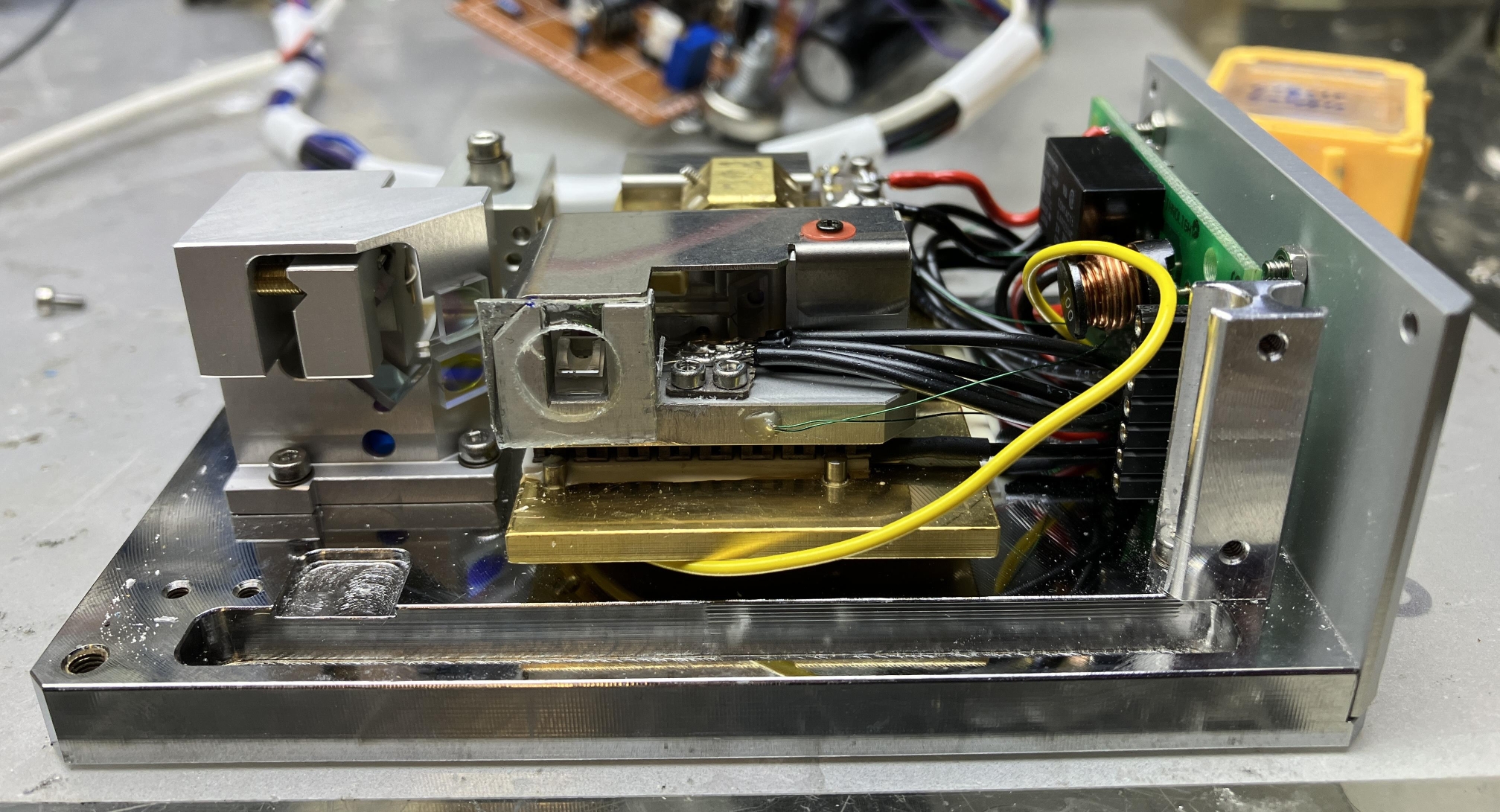
Taking a look at the front, we can see the adjustable output aperture and a kinematic mount that allows for adjustment of the optical pickoff assembly, which directs a portion of the beam towards the photodiodes for monitoring.
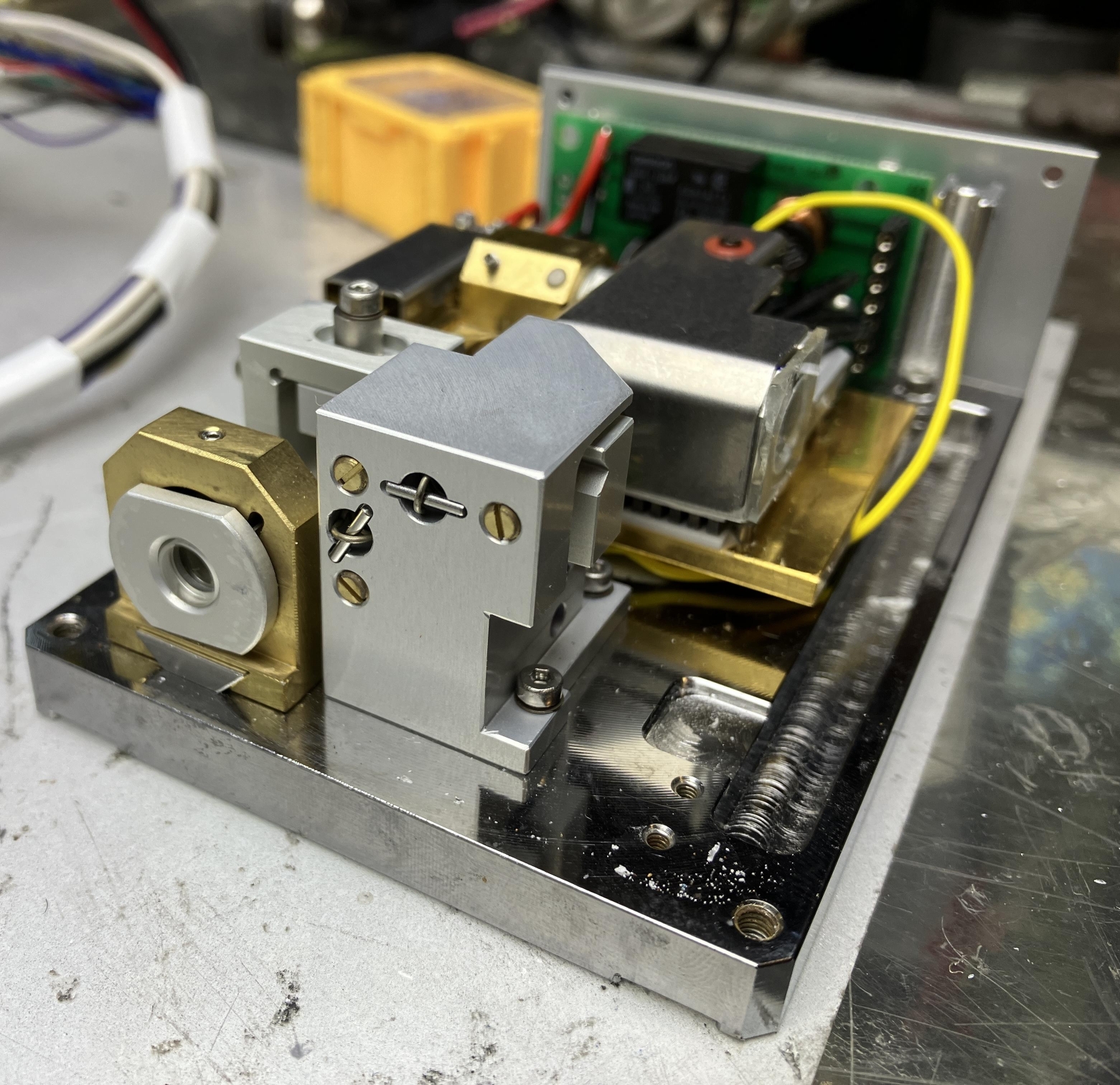
This view showcases the individual modules within the head along with their adjustment methods. The pump diode is hidden y a metal cover. Below the pump diode, there is a small thermistor inserted into the brass plate and sealed with adhesive. Two thin wires run back to the PCB.
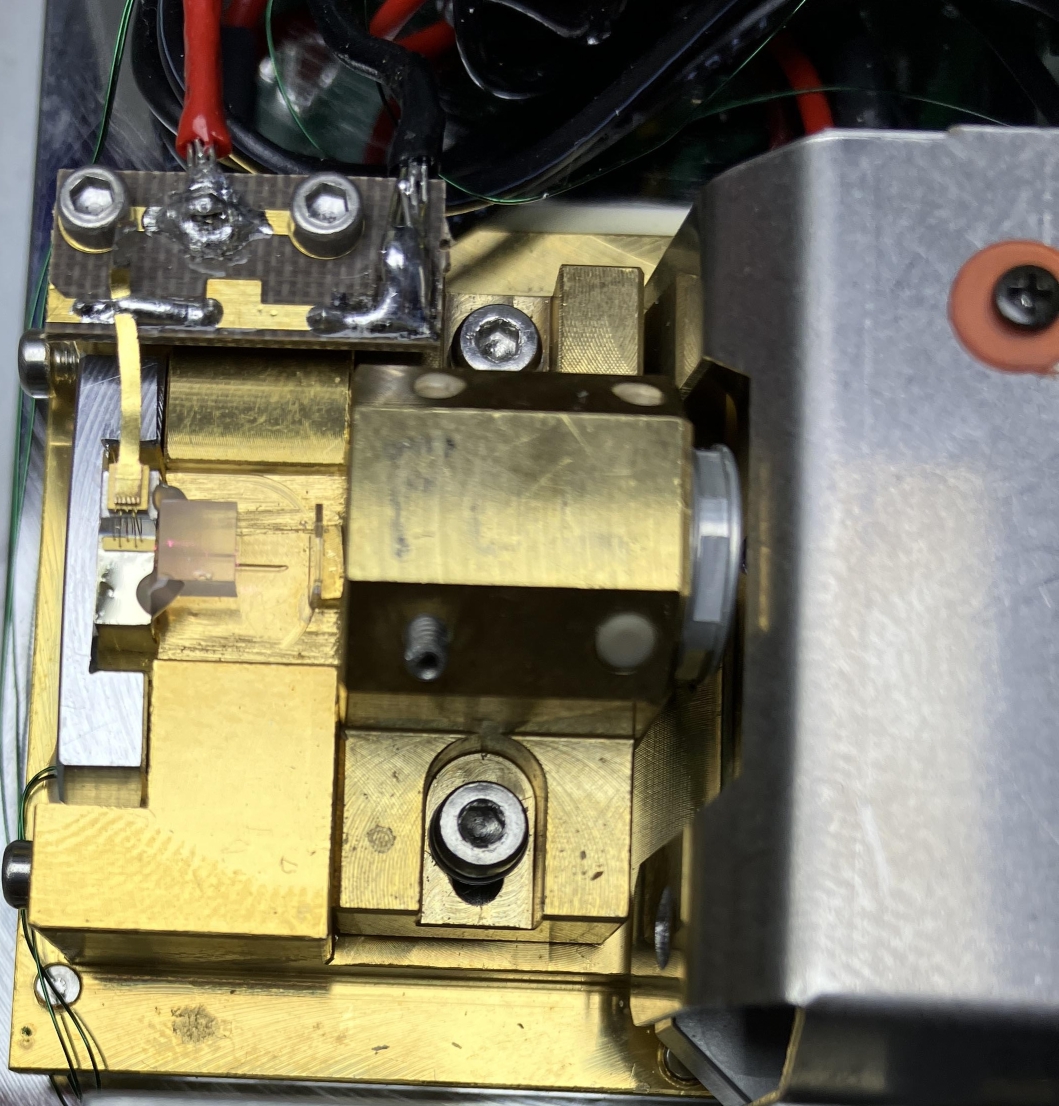
Here is a closer look at the 808nm c-mount pump diode with the cover removed. Mounted directly in front of the pump diode is a FAC or GRIN lens. There is an additional optic/filter mounted in the path in front of the diode.
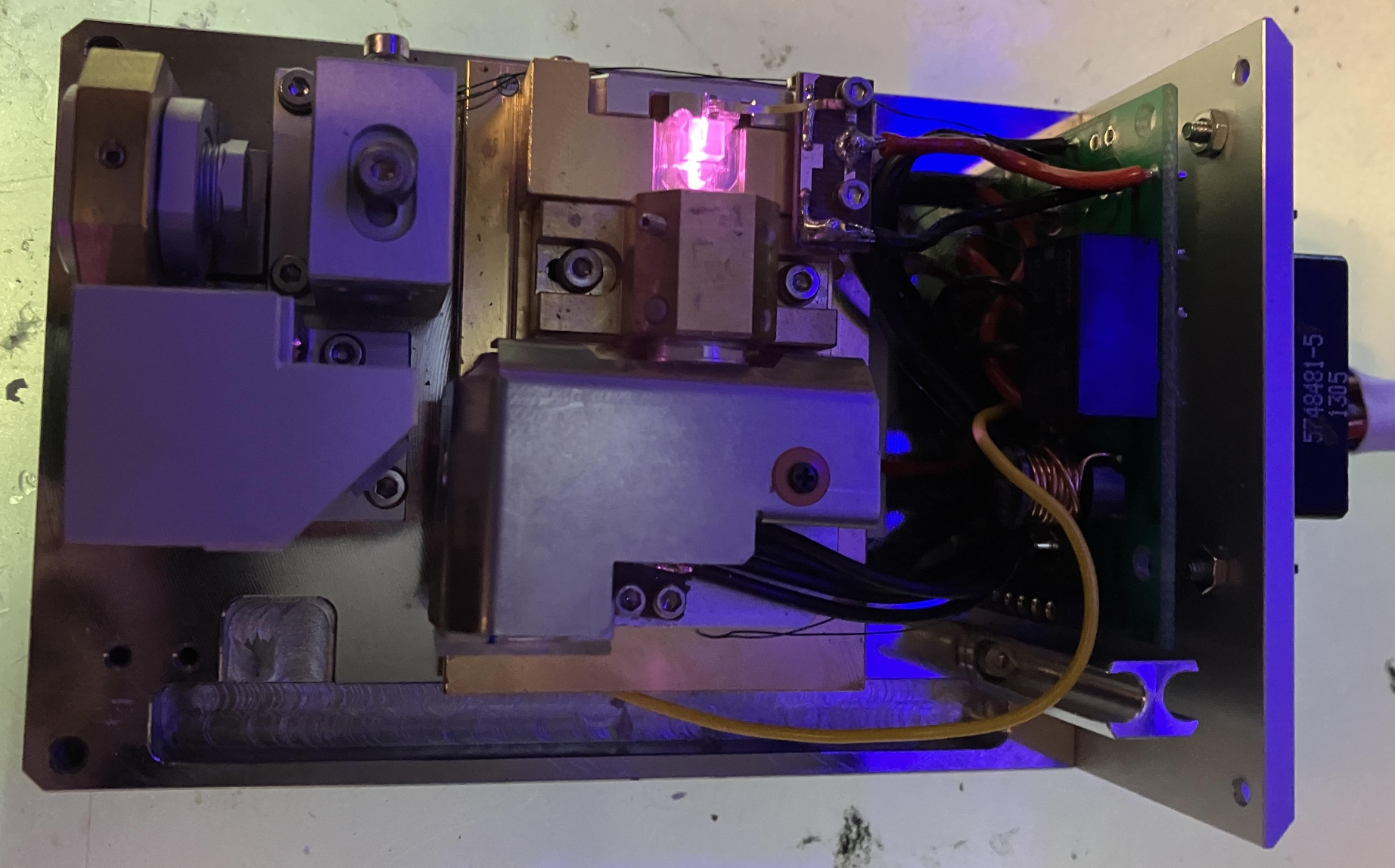
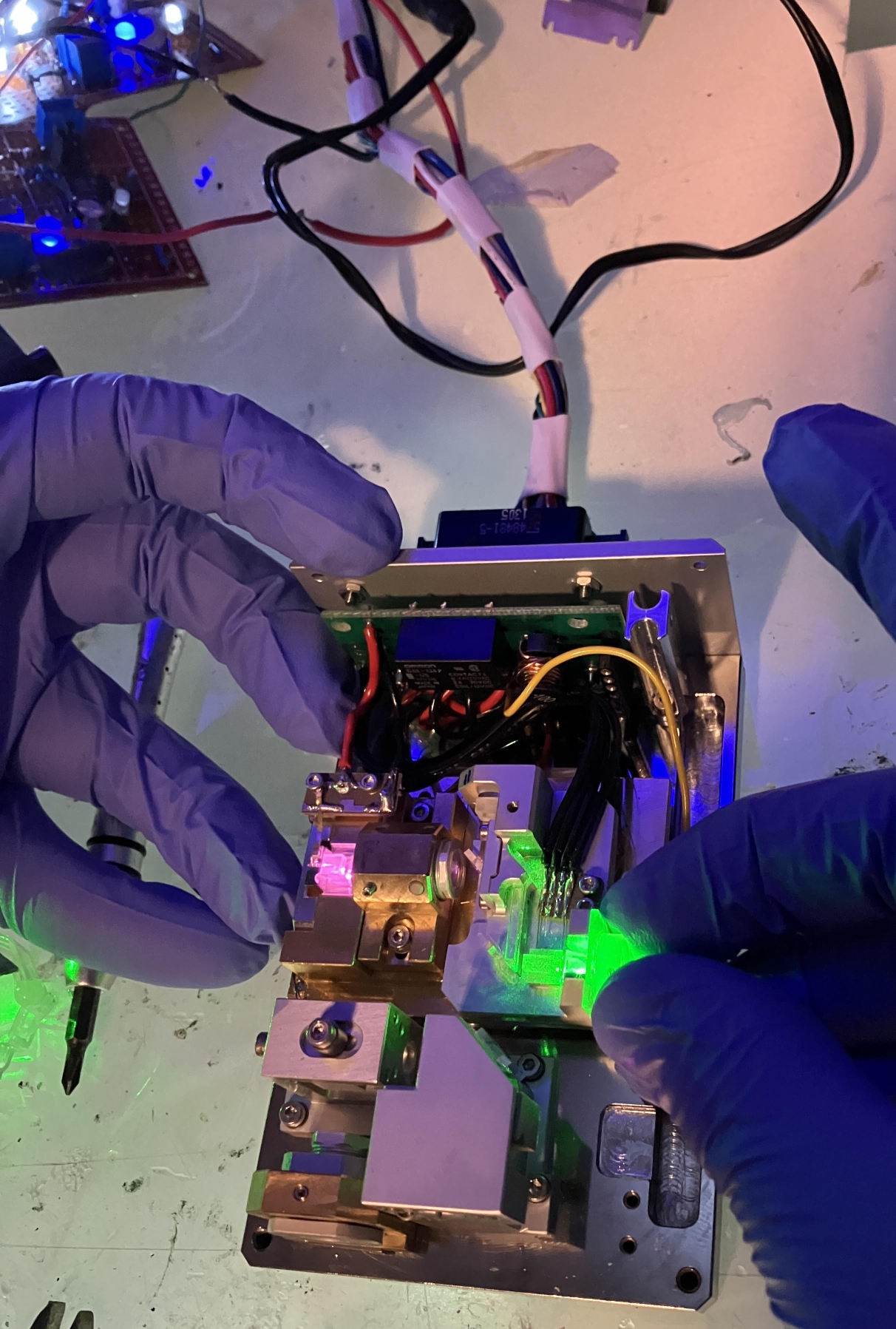
In the image below, the pump diode is powered on, but due to alignment issues and missing optics, only 808nm infrared laser light is visible.
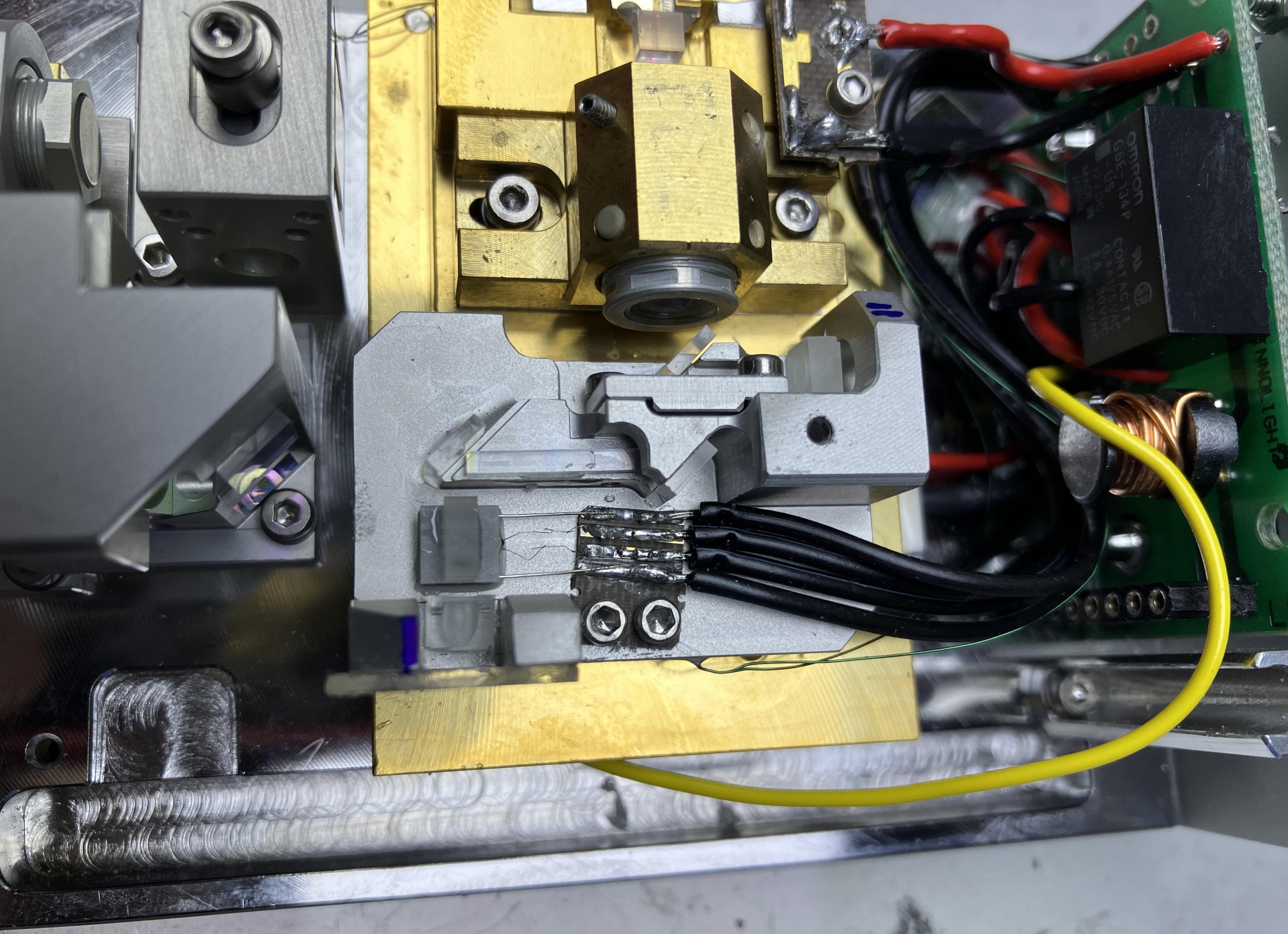
Here is a closer look at most of the critical optics, mounted to an aluminum plate. As mentioned earlier, the KTP/LBO crystal sits on its own TEC along with a very small thermistor. The PCB mounted to the plate with four black wires is for the crystal TEC and thermistor. This must be the most temperature-sensitive optic in this system.
After many attempts at careful alignment and positioning of optics, we did get this laser to produce some 532nm green. Unfortunately, we never got it to produce any 492nm light, but Patrick has another Calypso that he got working and was able to produce both 532nm and 492nm laser light.
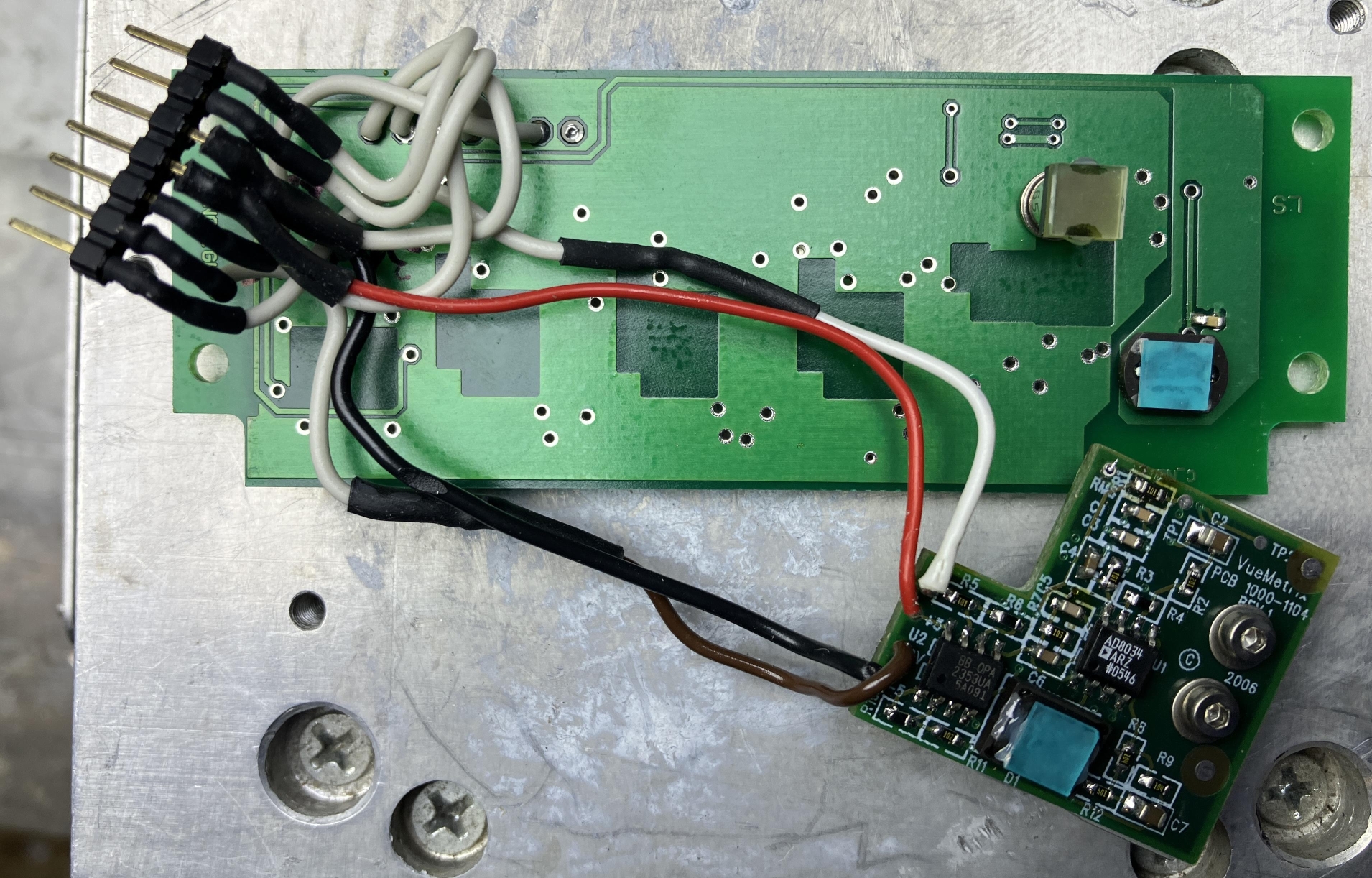
This board contains the feedback and monitoring photodiodes and also connects to a smaller board manufactured by VueMetrix, which contains an optical sensor, a FastFET operational amplifier from Analog Devices, and an OPA2353 operational amplifier from BURR-BROWN.
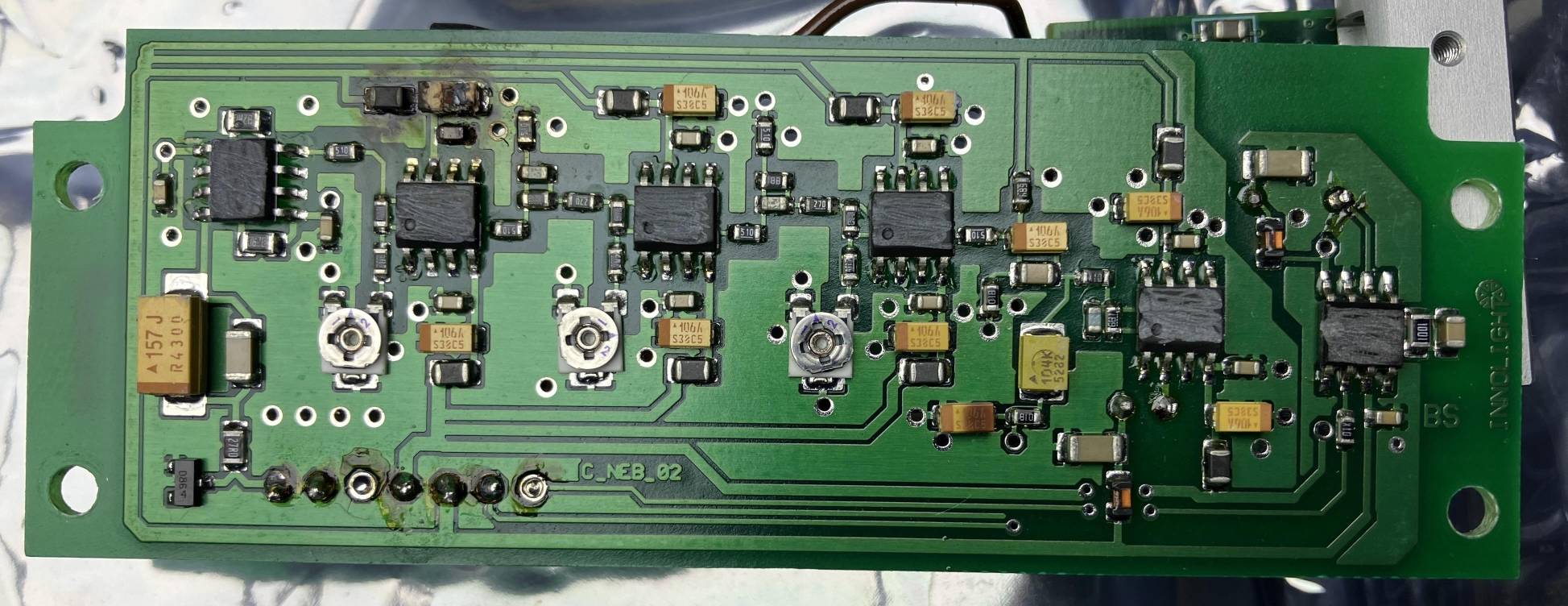
This particular board appears to be manufactured by Innolight who were nice enough to file away the markings on the 6 SMD chips, making it a bit more difficult to work with this board. It is likely used to temperature control and monitoring as evident by the three small potentiometers.
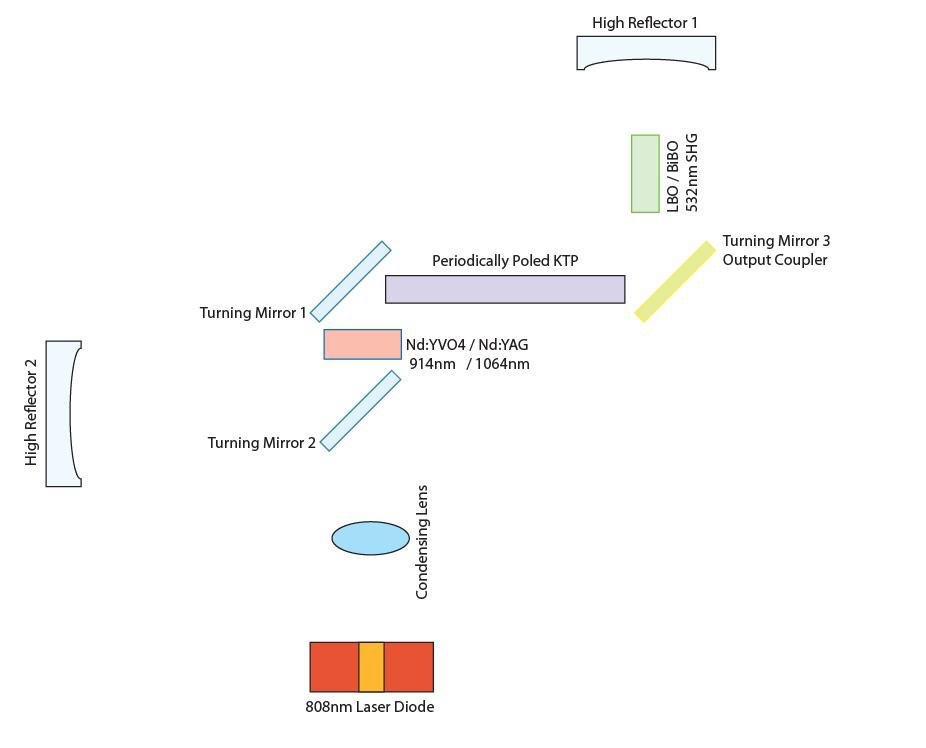
Laser light is generated by an 808nm c-mount pump diode with an attached FAC (fast axis correction) lens. The pump diode output power is likely around 2 watts. Next, the 808nm laser light passes through an adjustable focusing lens. Laser light passes through an optic and then into a crystal mounted to an aluminum carrier. The crystal is an Nd:YAG (or Nd:GcVO4) that which then produces two frequencies as laser light passes through, 1064nm and 914nm. 1064nm is common to find in many DPSS lasers with 914nm being more exotic. These two frequencies of energy exit the crystal in two different directions. Both beams pass through a KTP crystal and bounce off a reflector to another KTP or LBO crystal and bounce off another reflector. Additionally, there is a SHG crystal that results in 532nm laser light, but the 532nm beam is just dumped internally within the laser head and was not intended to be used in this model. Finally, some light is redirected to a photodiode for monitoring, through some beam aiming optics, and through the output coupler and out of the head as 491nm laser light.
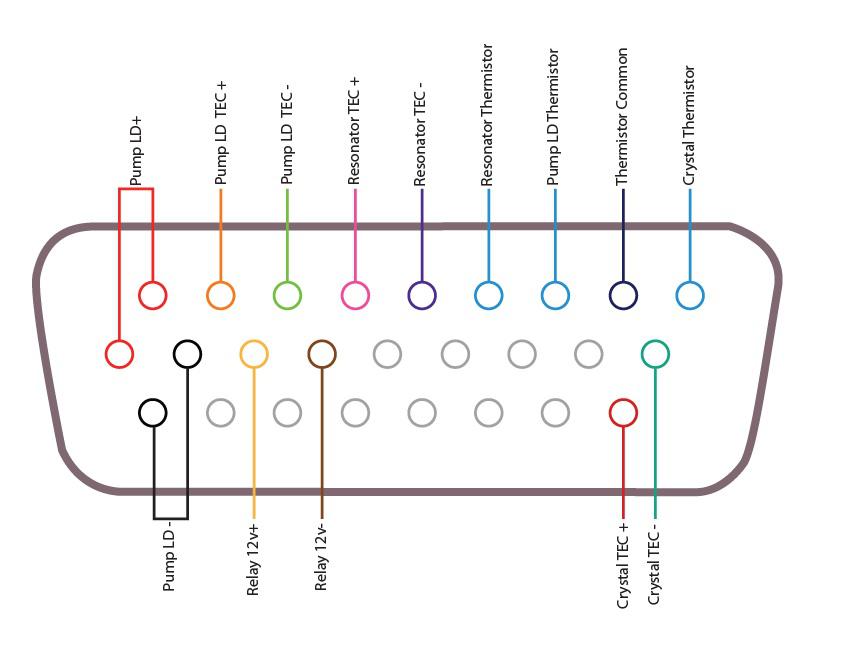
Below is the pin-out for 26-pin connector on the back of the laser head.
Learn more about this laser by visiting the links below.