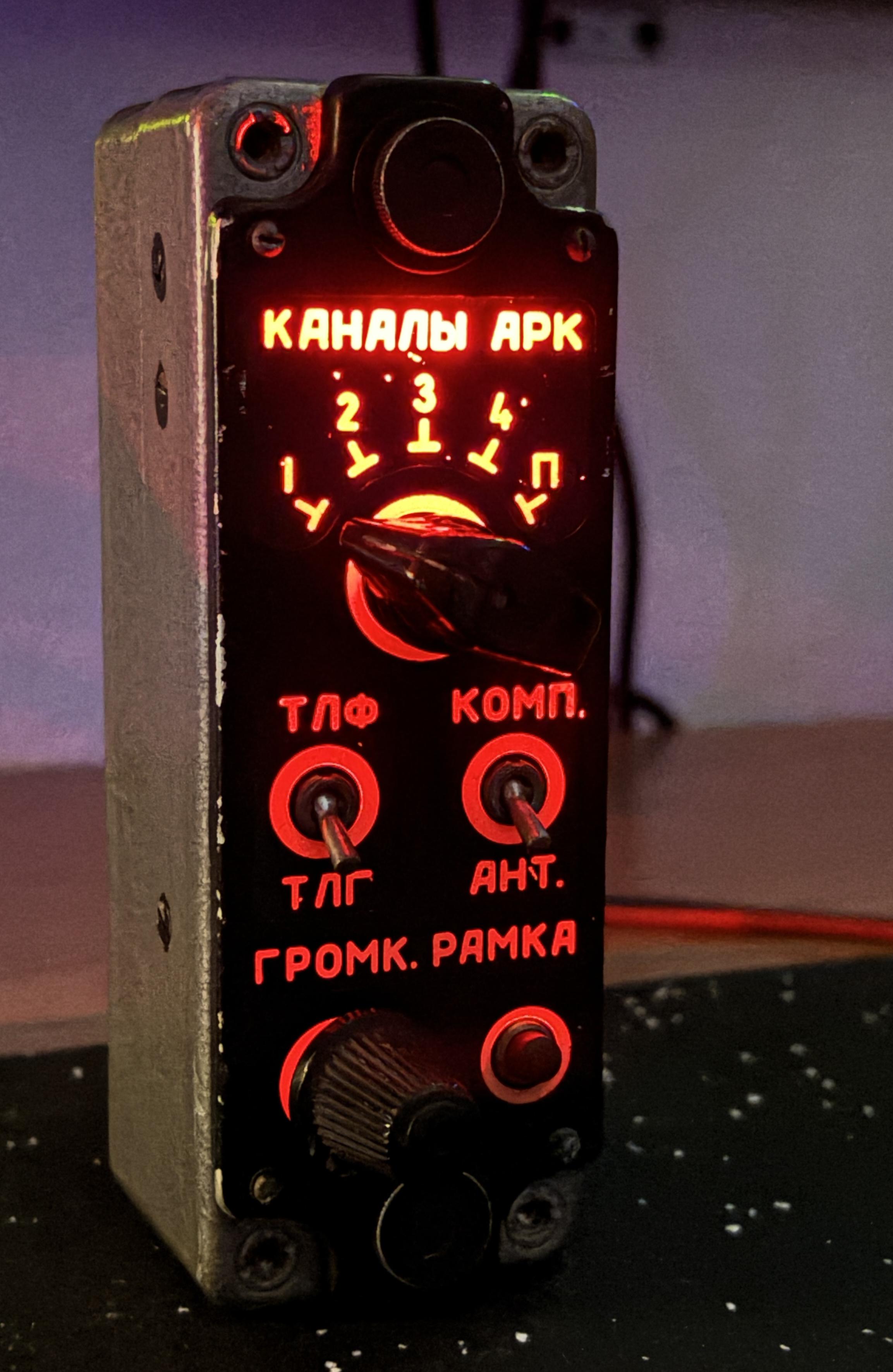
This is a remote control panel for the ARC-15 radio compass system. Depending on the aircraft configuration, there could have been multiple remote control panels located within the cockpit along with a primary control panel. This control panel is a simplified version that chooses from 8 pre-programmed frequencies. This small panel has a nice variety of controls that include a 5-position rotary selector, two toggle switches, a potentiometer, and a momentary pushbutton. Then panel is illuminated via incandescent bulbs secured in sockets on the top and bottom of the unit.
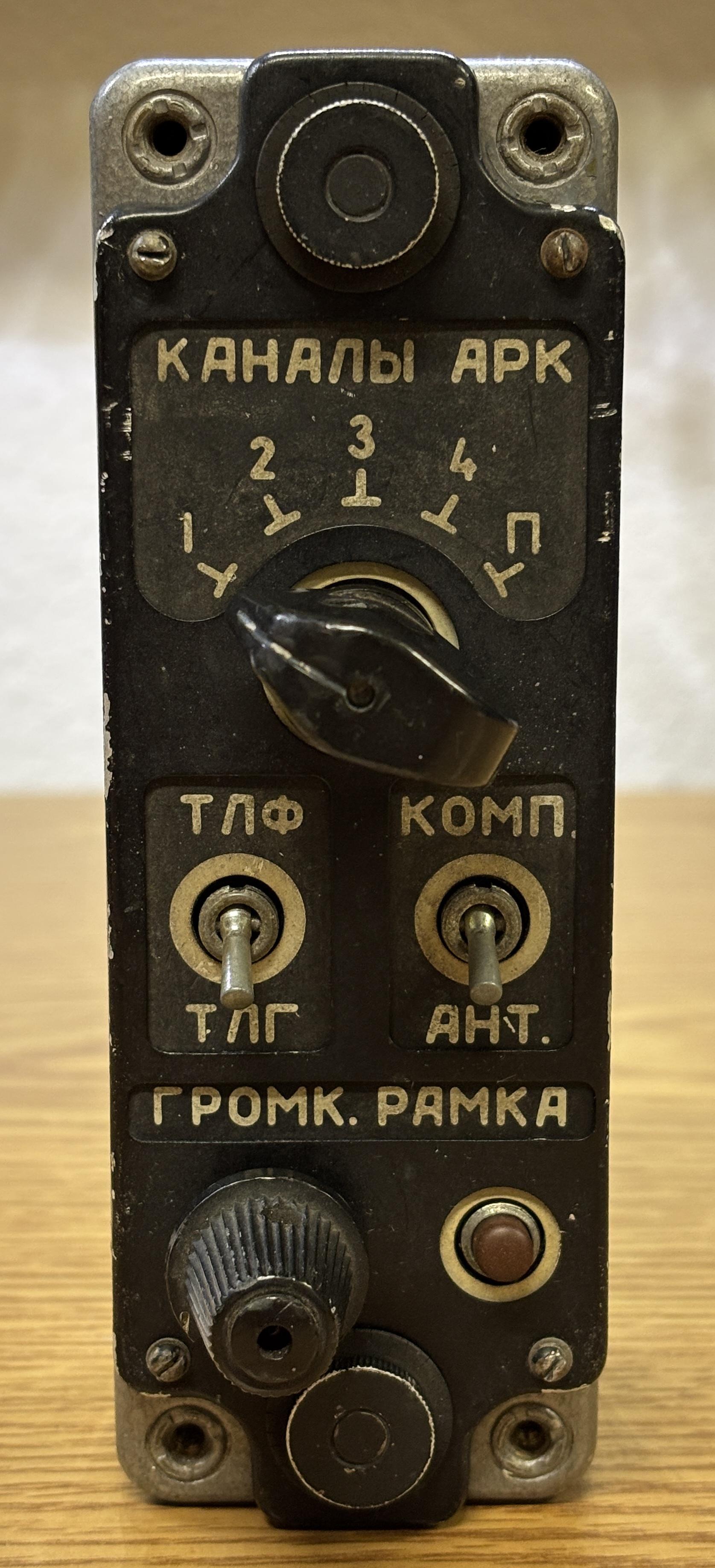
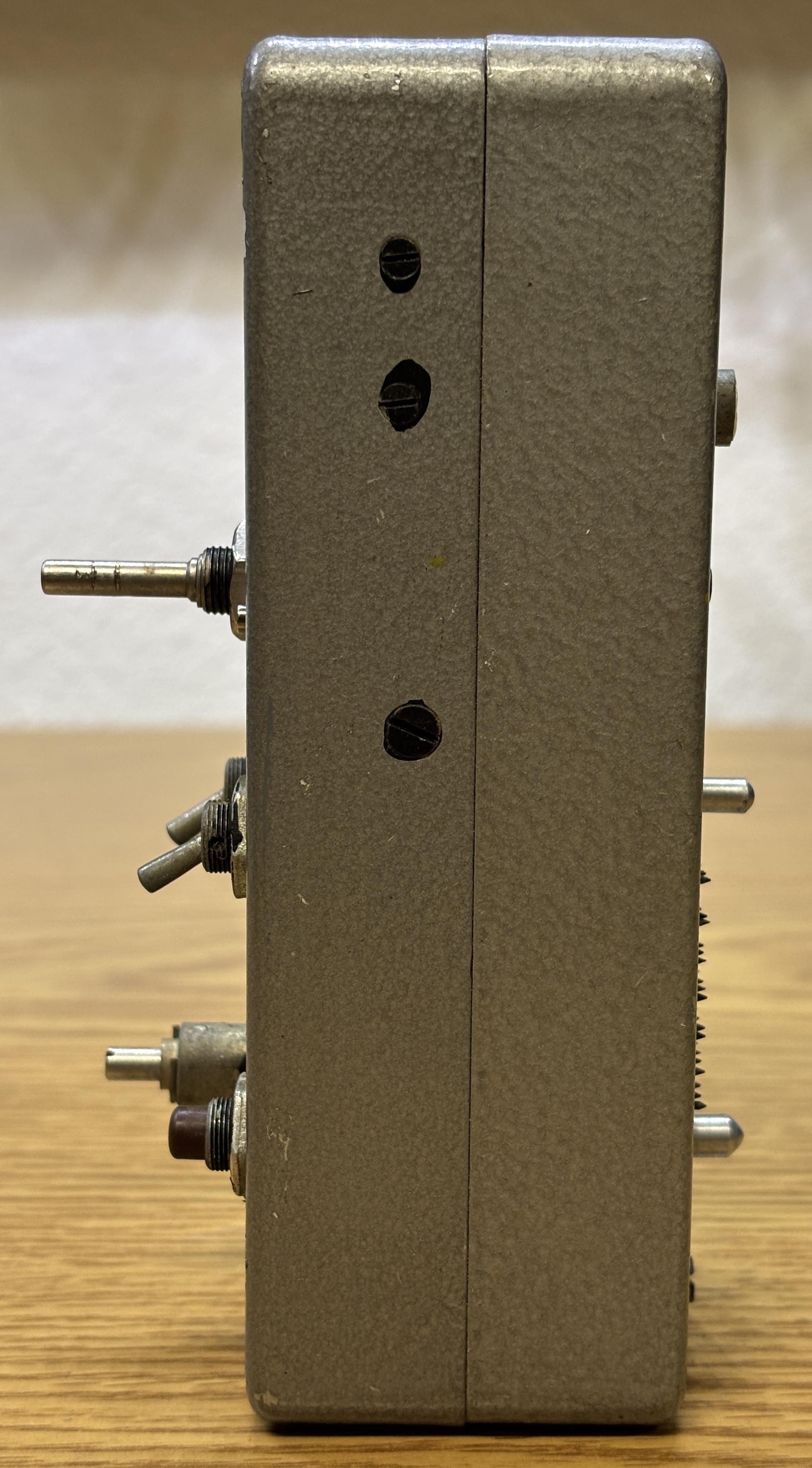
It's an all metal enclosure that separates in two halves.
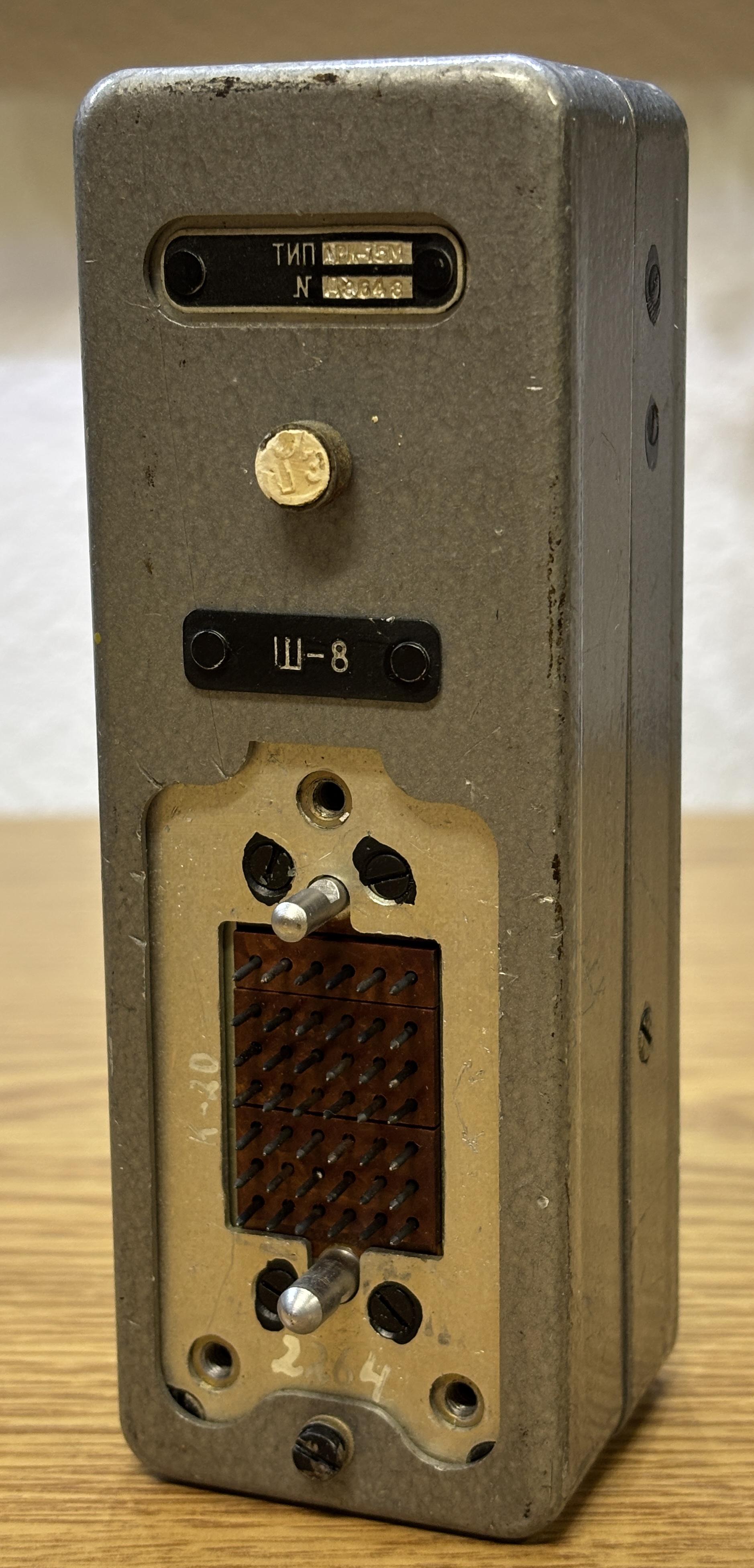
On the back there are two information plates, and a large bed-of-nails style connector with a grid of 42 pins. The studs on either side of the connector likely mate with a socket that accepts the pins. The back half is secured by two slotted screws, one of which is contained within a small collar filled with a white compound. This is then stamped and hardens to form a tamper seal that must be removed in order to turn the screw.
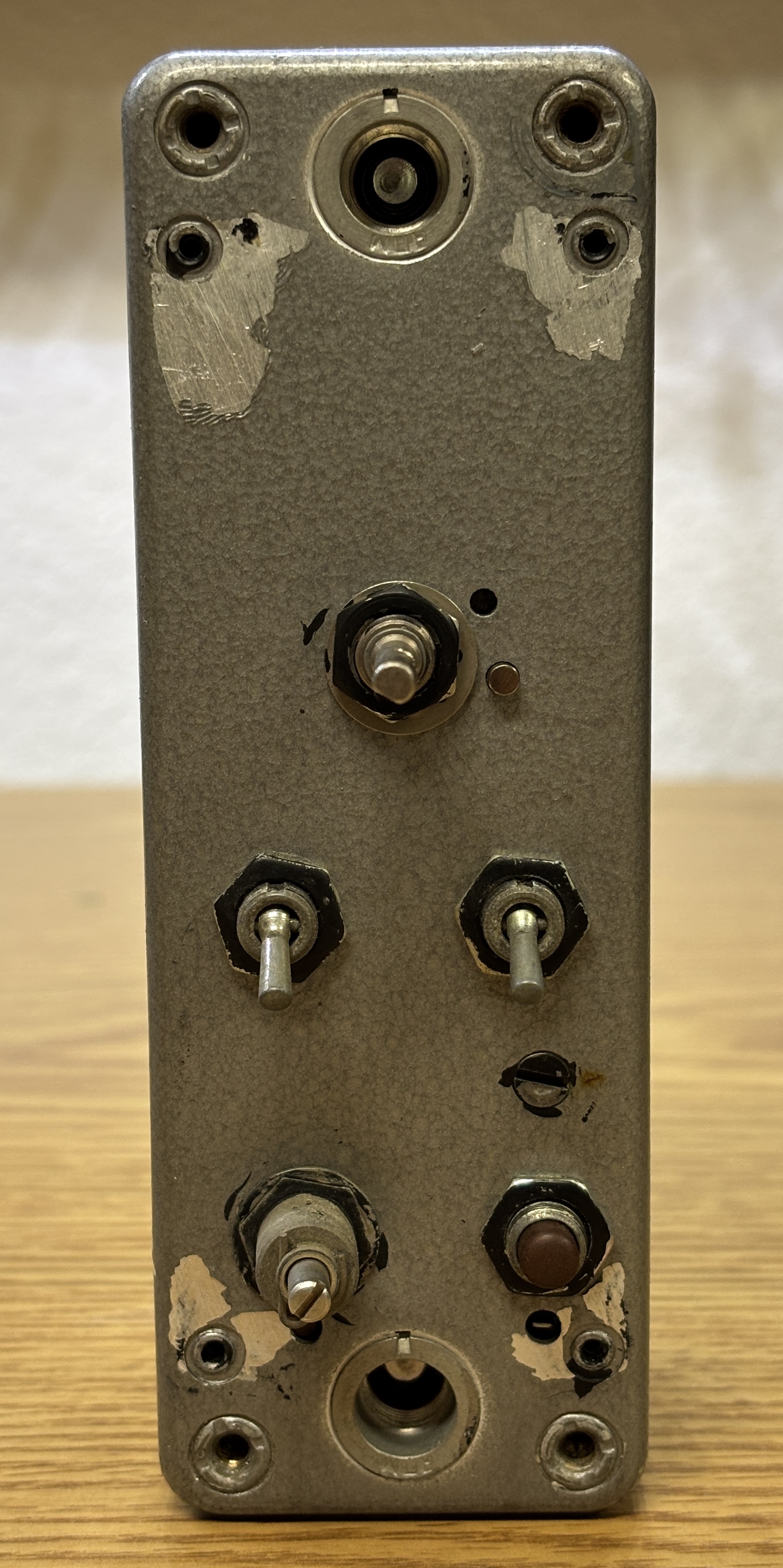
With the illuminated from panel removed, the switch retention rings and lamp sockets are visible. The hammered metal finish is also peeling off around the threads.
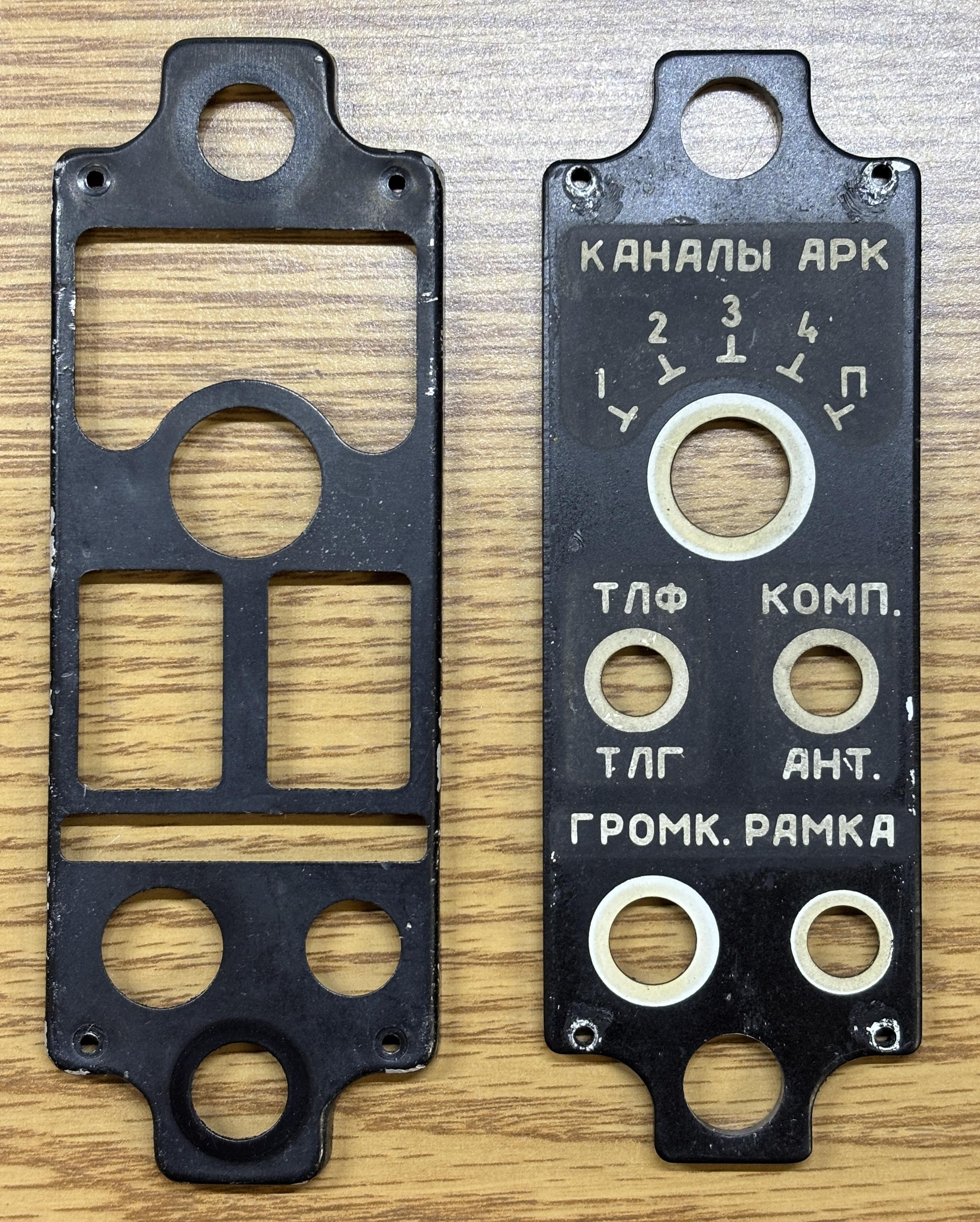
The illuminated front panel comes apart in two sections, the rearmost piece is painted translucent plastic which allows light to shine through the white etched areas to illuminate text and switch positions. A metal frame mounts in front of the plastic piece and secures it to the rest of the enclosure.
Removing the two slotted screws on the back allows the rear section of the enclosure to slide away.
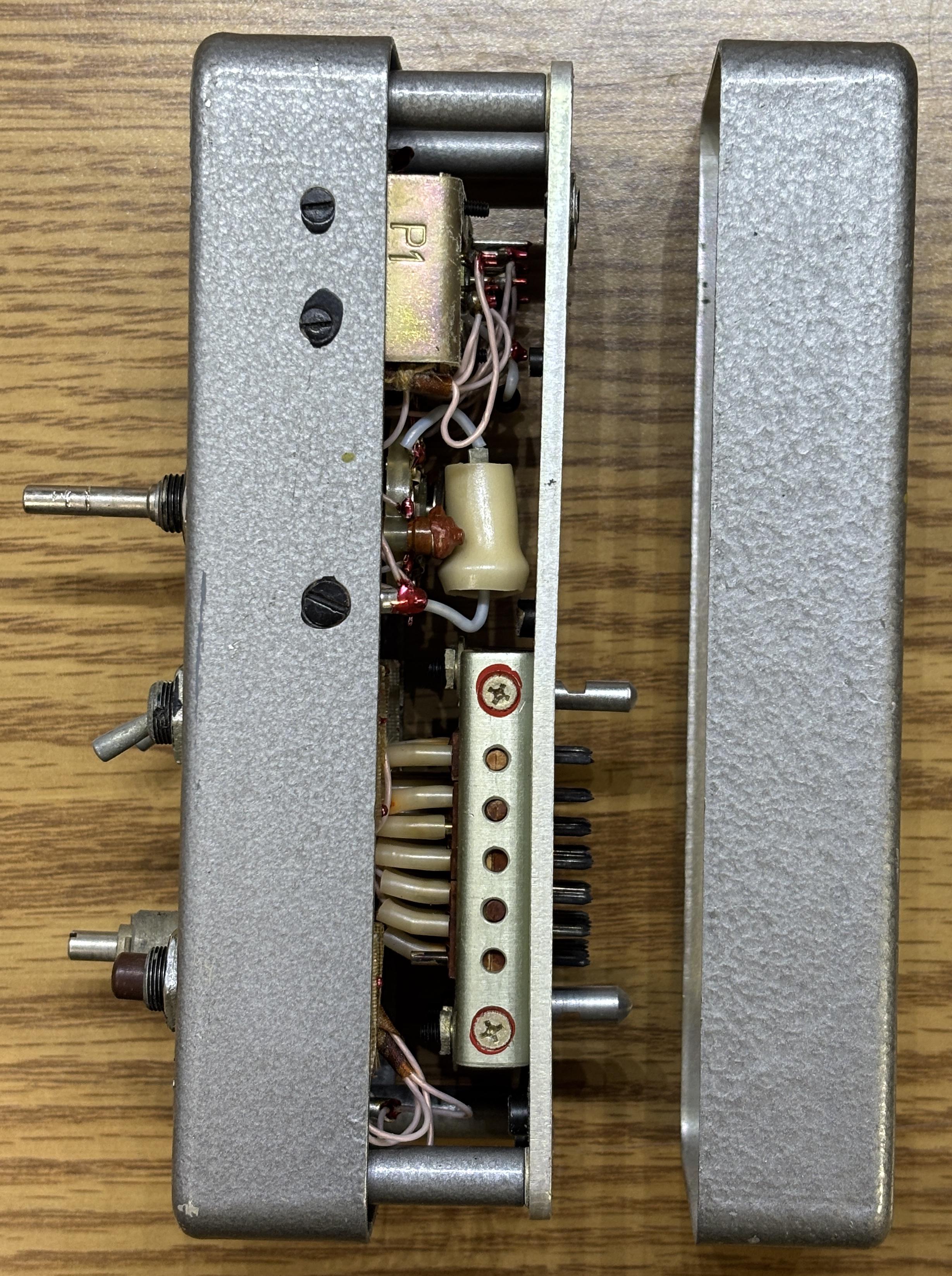
There aren't any digital or semiconductor components inside this panel, but there are several genuine soviet switches and electronic components along with some very uniform wiring. Also, the rear connector is pretty interesting as it seems to be made up of two 18-pin sections and one 6-pin section. It seems pretty modular in nature, allowing for a wide variety of connector implementations with the same overall components.
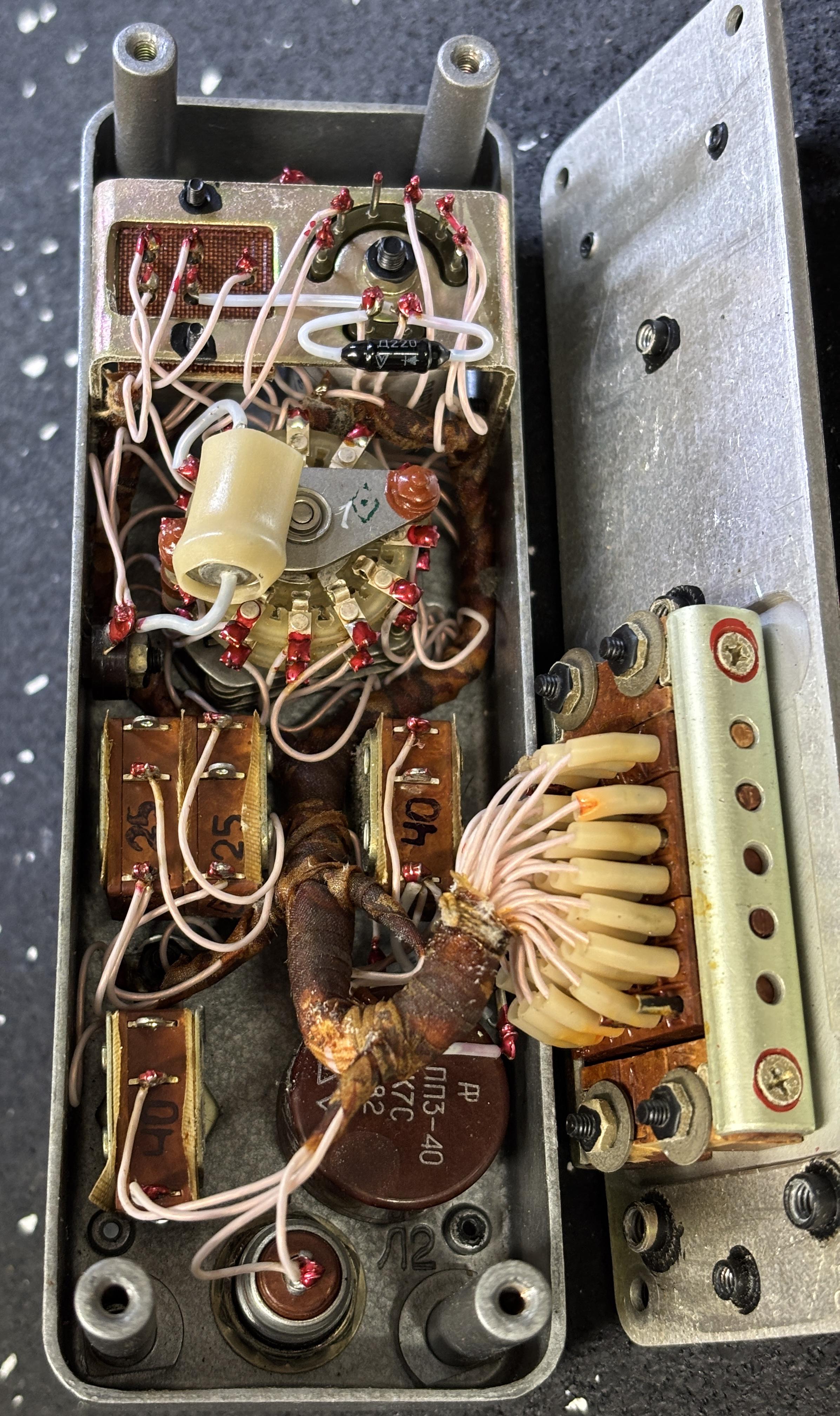
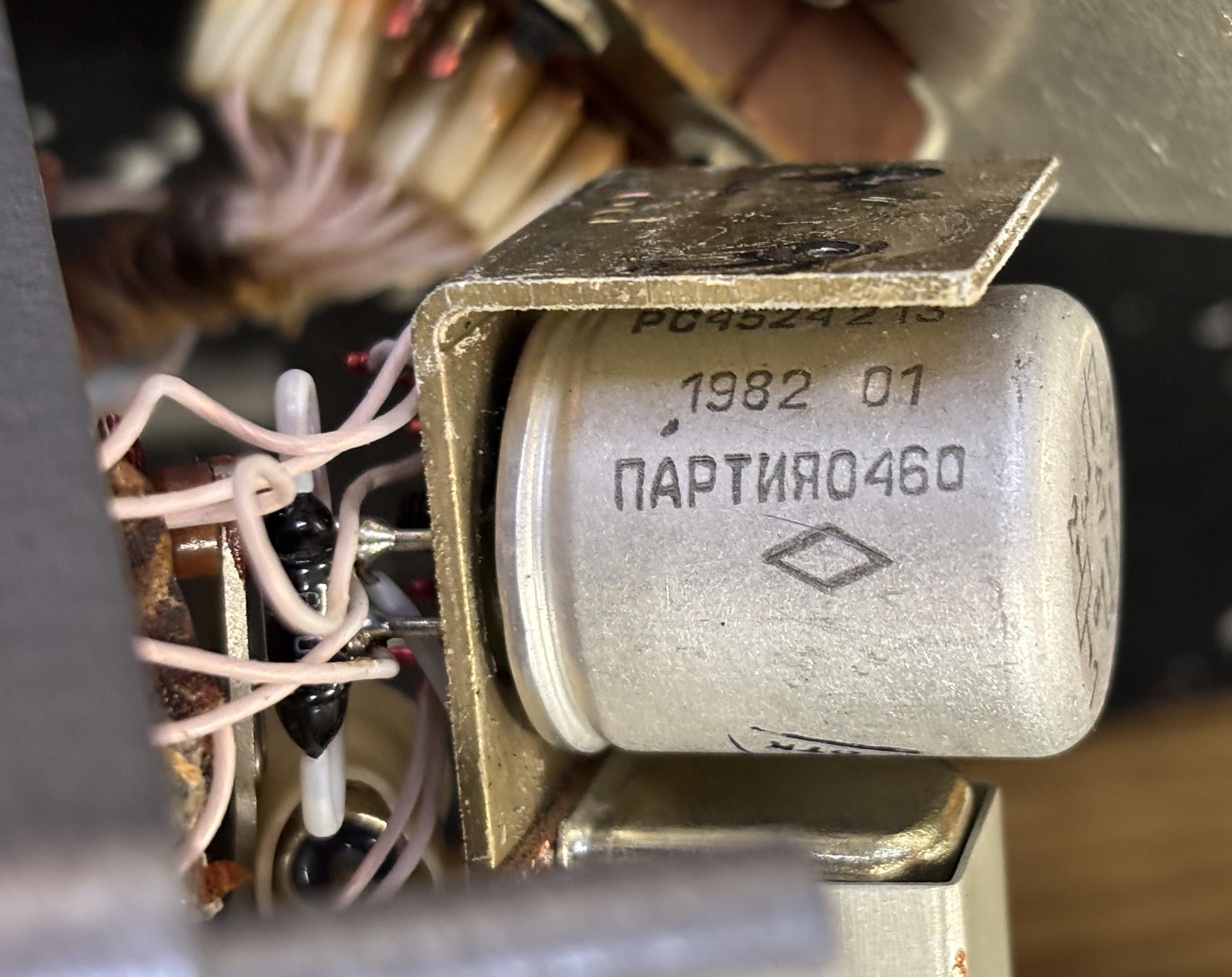
Located towards the top is a pretty neat metal can relay with a diamond symbol on the side.
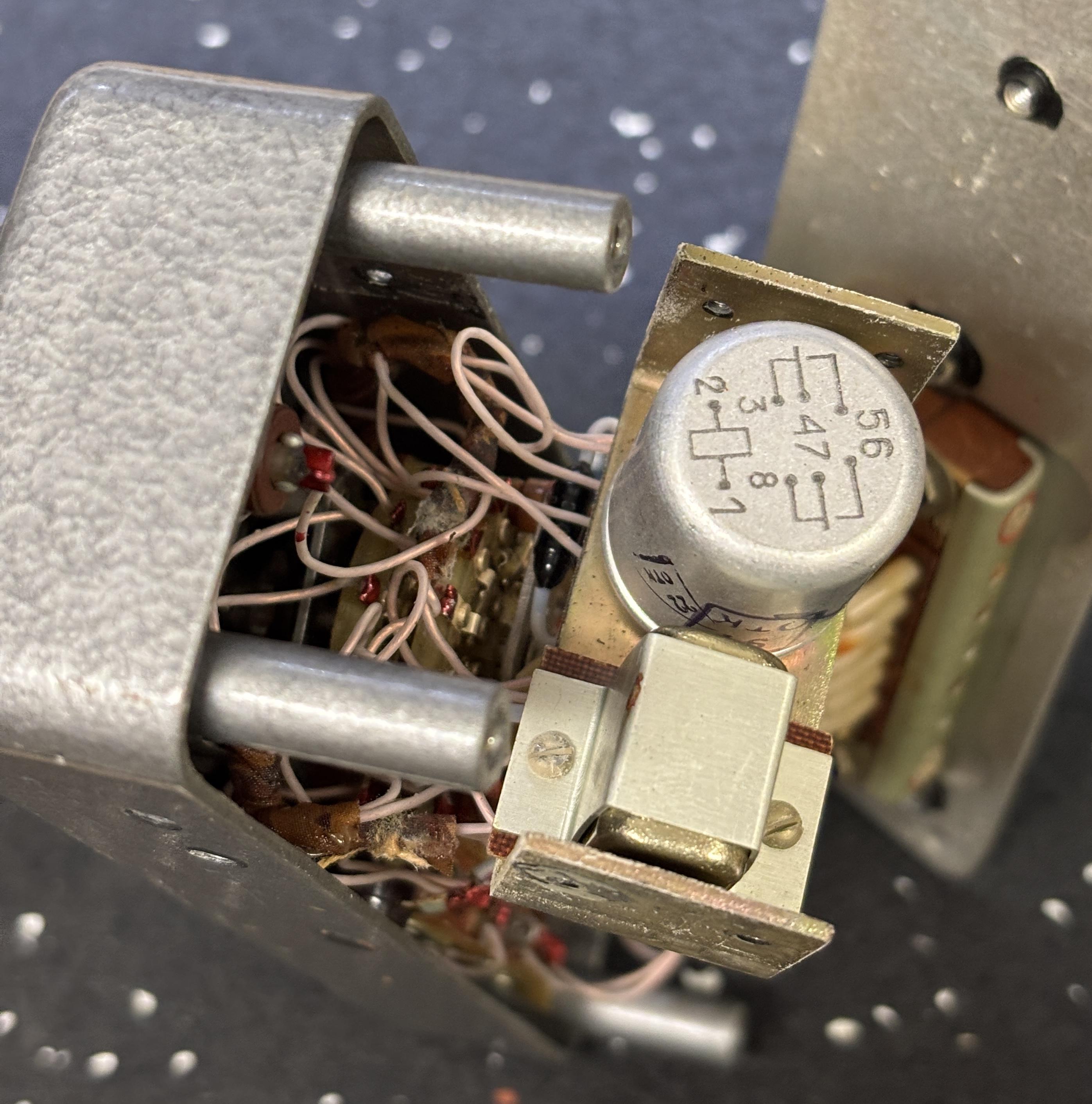
Our understanding is that this symbol is used to mark components suitable for use in Russian aerospace or defense systems.
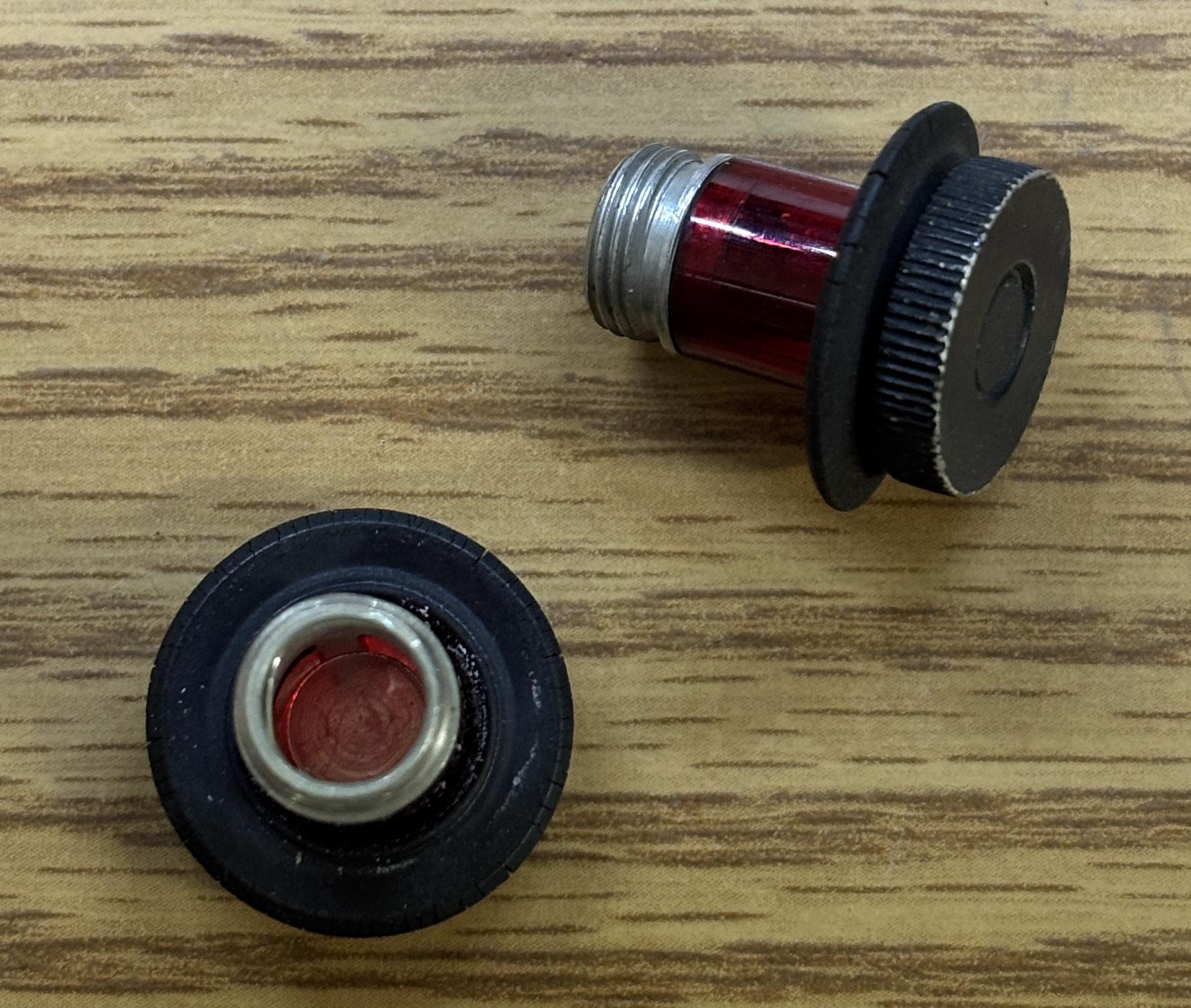
Here are the two incandescent lamp holders which screw into sockets on the top and bottom of the panel.
Applying 28V DC power to the backlight illumination pins causes the panel to light up menacingly in red!