This is the chaff and flare dispenser control panel from a Panavia Tornado aircraft. The Tornado was a flagship of the UK Royal Air Force (RAF) up until 2019. We purchased this part online from one of many sellers liquidating UK MOD equipment from decommissioned aircraft. This unit even came with a form indicating that it was in serviceable (working) condition! This control panel is used to select and trigger the dispensing of flares and chaff from the aircraft. Flares are a countermeasure used to counter air-to-air or surface-to-air missiles that utilize heat-seeking technology to lock onto a target. The intense burning of the flare creates a heat signature greater than that of the aircraft's engine exhaust, thus causing the missile to follow the flare instead of the aircraft. Chaff is another countermeasure intended to blind or disrupt radar systems by dispersing thin strips of aluminum or other materials outside and around the aircraft. This confuses radar systems and makes it significantly more challenging to identify a target. Based on our research, this device was likely integrated with the aircraft's radar warning receiver (RWR) system and a BOZ countermeasures pod (manufactured by SAAB).
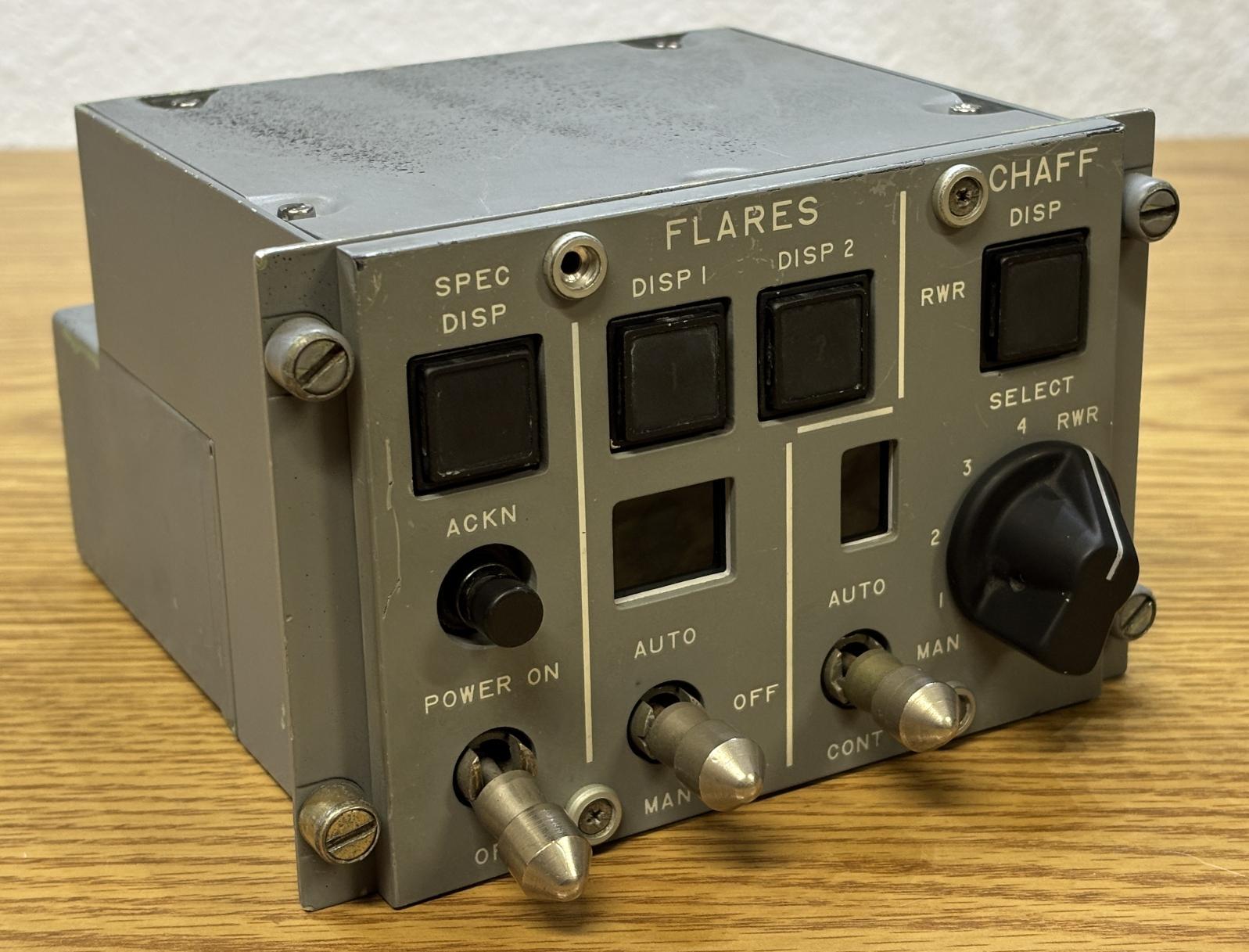
The control panel features four Korry-style pushbutton switches that have illuminated text, three locking toggle switches, a single unlit pushbutton, a rotary selector switch, and some seven-segment displays. A list of the switches along with descriptions is provided below. The complete accuracy cannot be guaranteed to due to the lack of available information.
- SPEC DISP pushbutton: Special dispense, likely initiates a pre-defined sequence of countermeasures
- ACKN pushbutton: Acknowledge (an error or warning)
- POWER ON switch: Enable the dispenser system
- DISP 1 & DISP 2 (FLARES) pushbuttons: Trigger flare dispenser/release flares from either dispenser pack
- AUTO/OFF/MAN switch: Change flare dispenser operation mode
- RWR/DISP (CHAFF) pushbutton: Trigger the release of chaff, likely related to radar warning receiver input
- CHAFF rotary selector: Select chaff magazine or release program (RWR position for radar warning receiver automatic response)
- AUTO/MAN/CONT switch: Change chaff dispenser operation mode
The control unit is comprised of two separate metal enclosures that are joined together by internal screws. The are quite light and resemble the painted aluminum structure of other military aircraft parts.
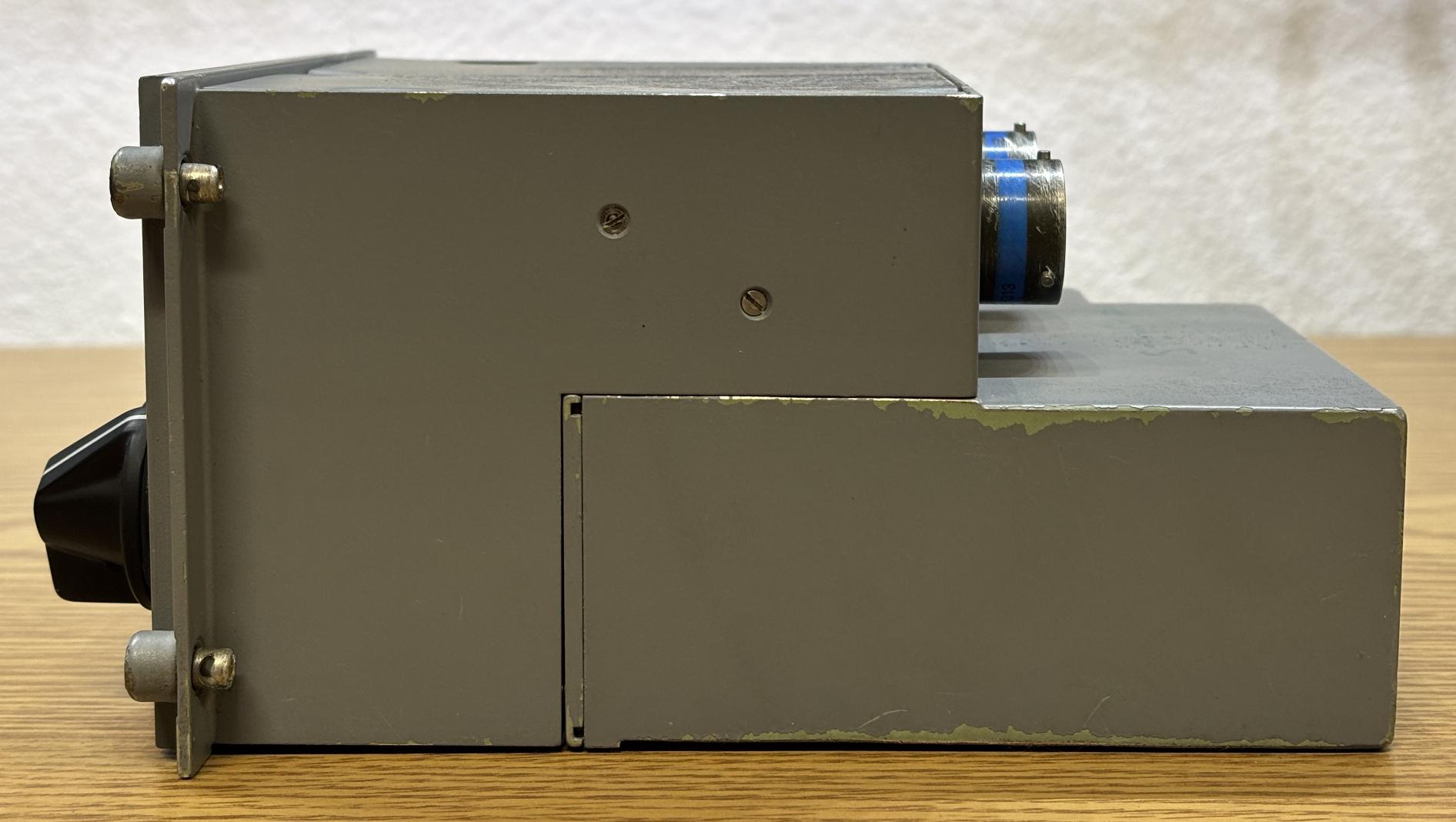
On the back of the unit are two mil-spec twist-lock connectors labeled P81 and P82. There is an information plate that lists no stock number and oddly has the serial number scratched out. Spooky. The field below the stock number contains the text "CONTROL UN", which presumably means control unit. The part number is RP401010. Last is the supplier code, S3514, which is the CAGE code of SAAB AB. We received the equipment conditioning label (MOD Form 731) with this unit which ironically included the serial number as well as the NATO stock number (5865 99-3394610). The form was dated 2017, which is relatively recent for an ex-MOD part.
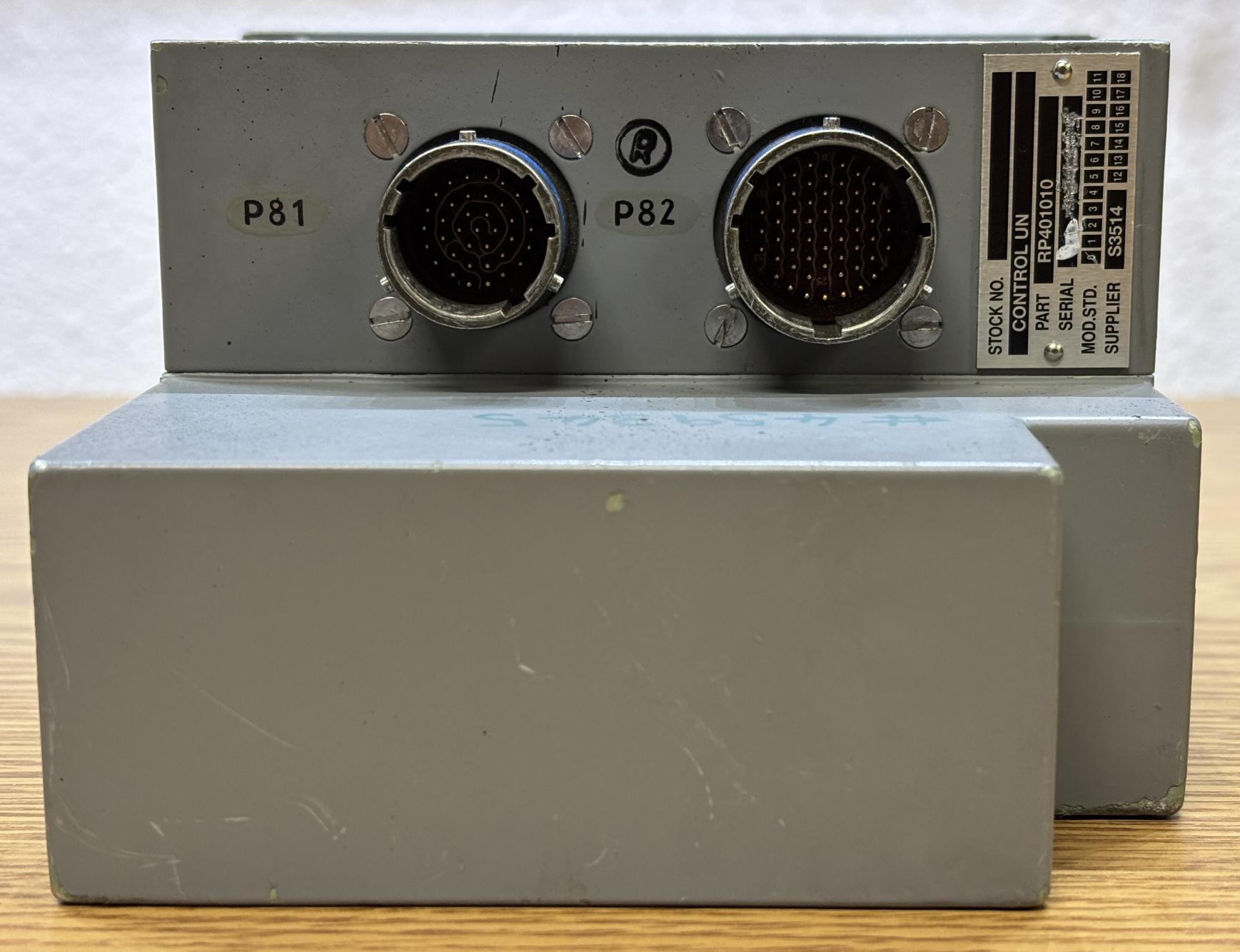
The illuminated front panel is secured to the enclosure by four Phillips screws. One was badly stripped and had to be drilled out. Removing the panel reveals some information about it. It's manufactured by Sirio Panel, is dated 1995, and has a part number of HF1204 (or PN-723-7075/01). According to some handwritten text near the connector, the illumination requires 115V AC at 400 Hz. This seems quite high for panel lighting, but other Tornado cockpit panels have the same illumination voltage requirements. The panel uses a small BNC plug that mates with a connector inside of the enclosure. Located in the center of the panel are two tinted windows with rubber gaskets that keep them pressed into recessed openings. These sit directly in front of the seven-segment displays mounted on a PCB within the main enclosure.
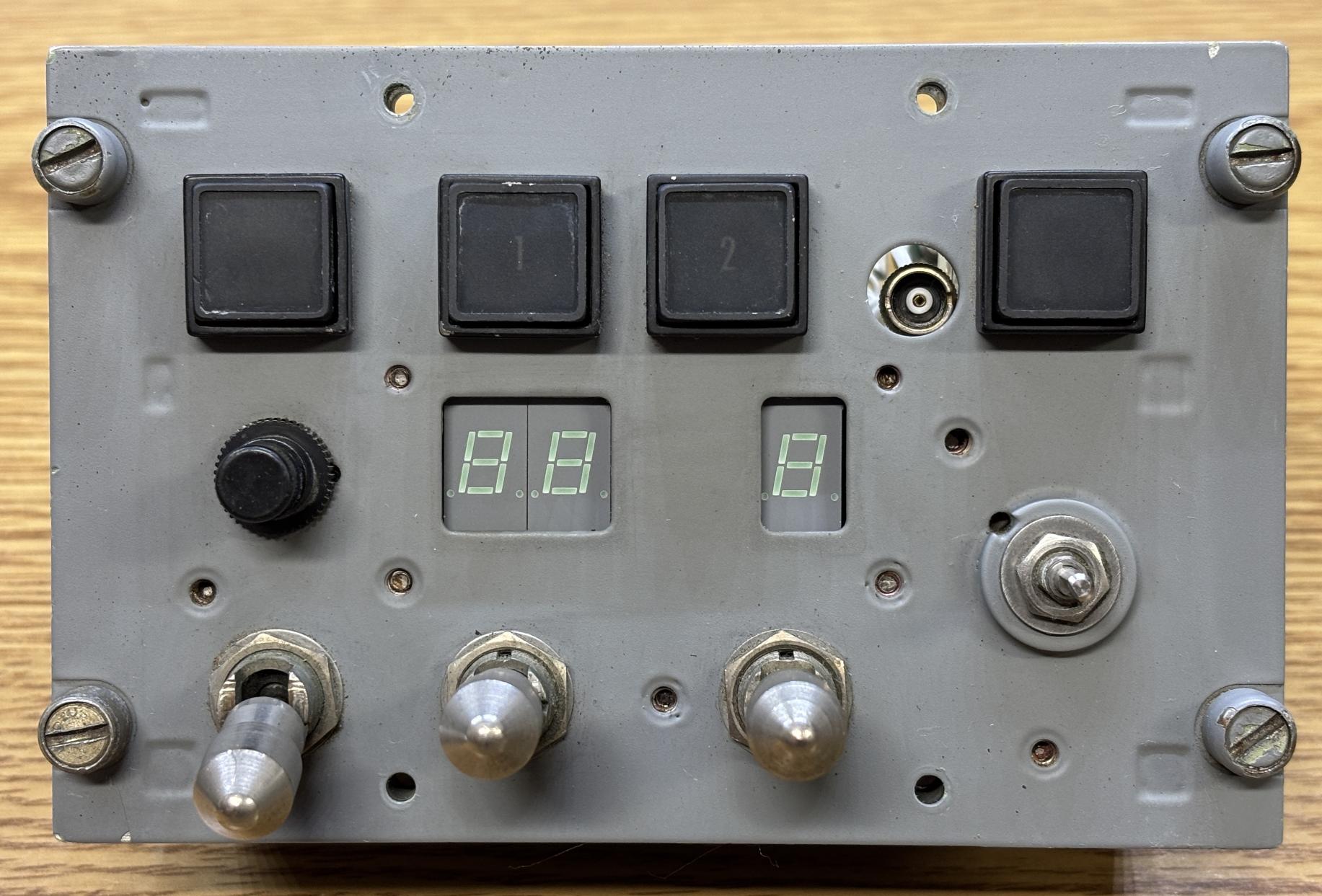
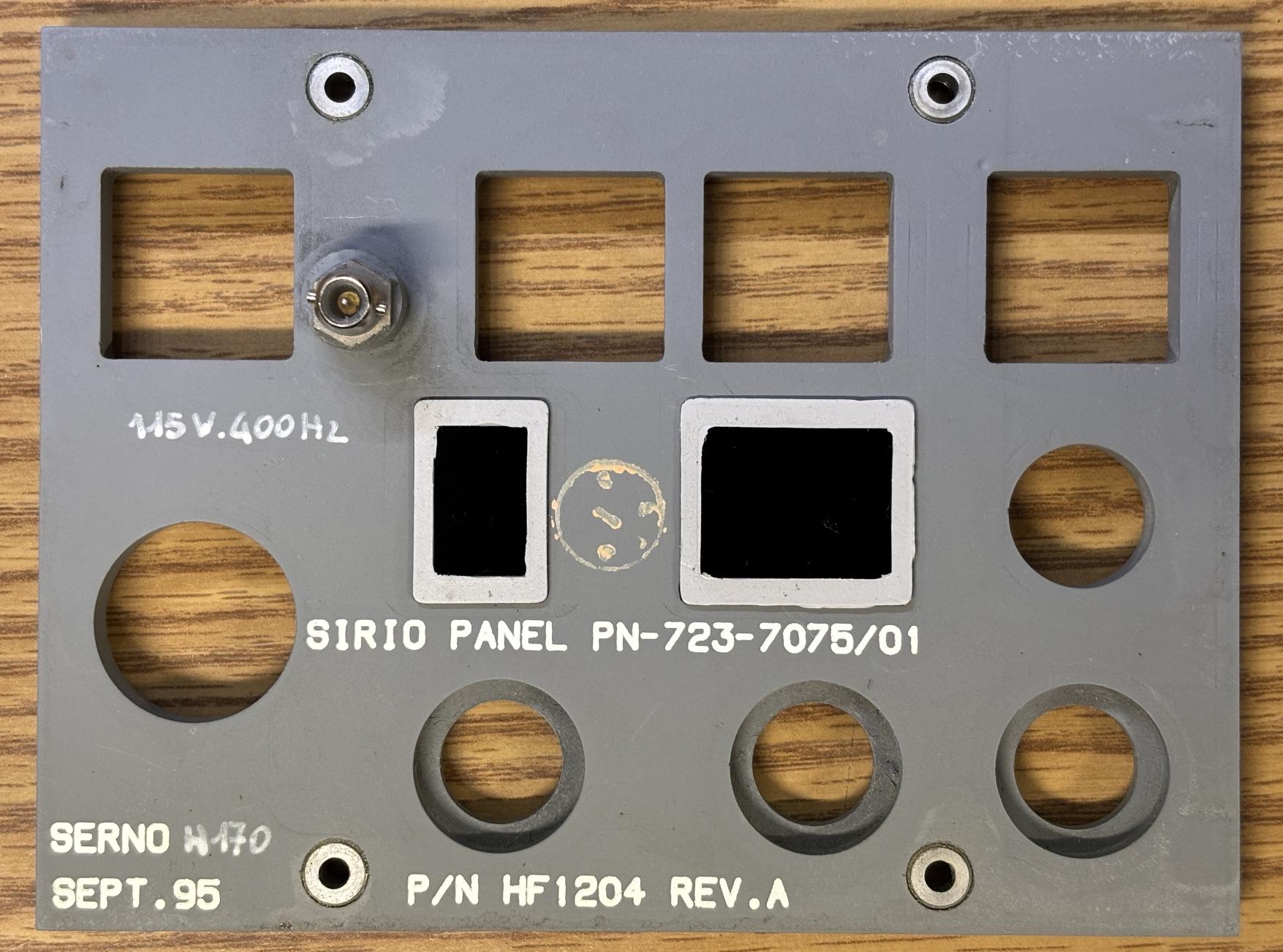
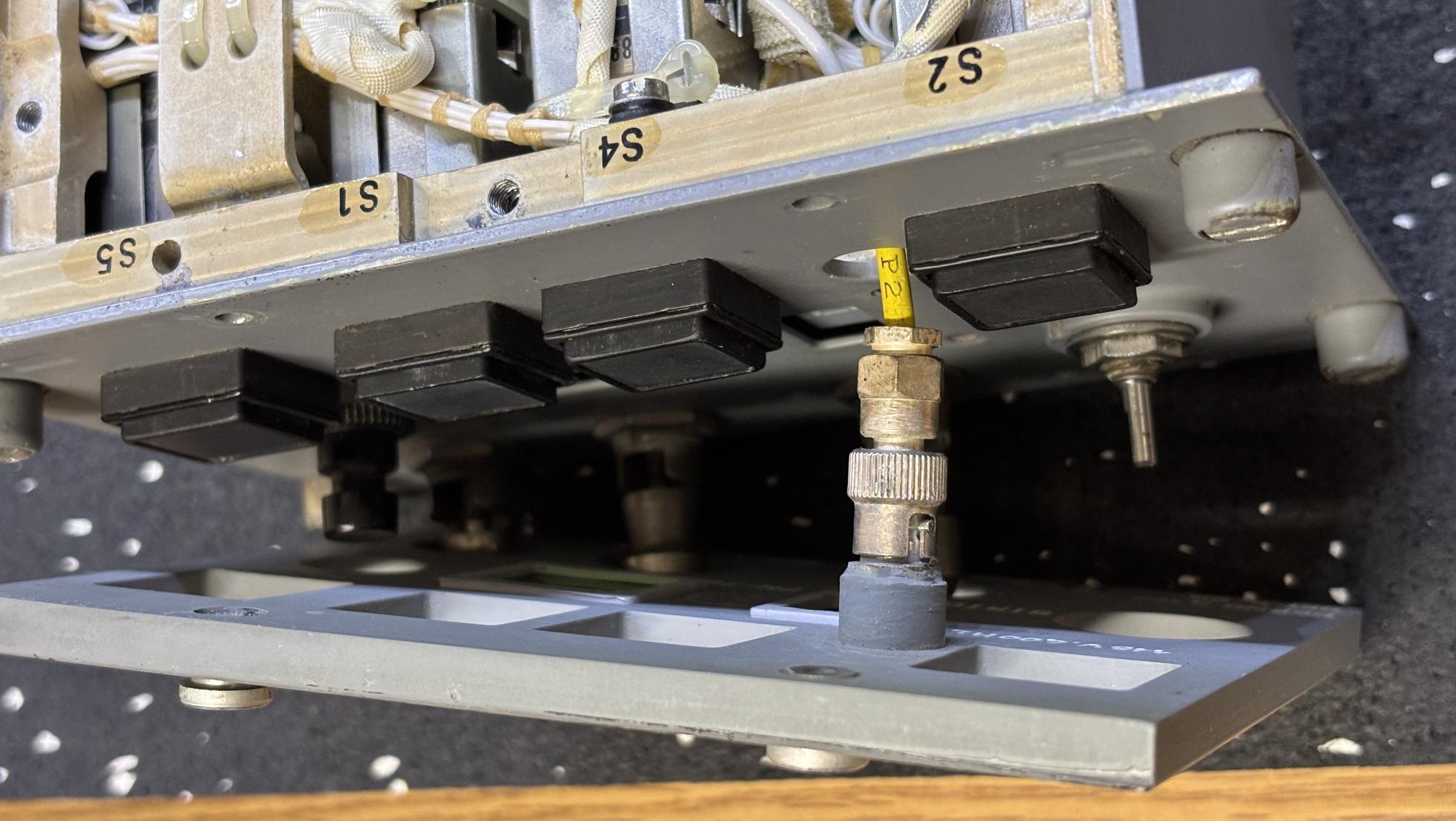
In the image below, you can clearly see the small BNC connector used for the front panel illumination. We are unsure of the illumination technology, but think it might be electroluminescent, as that technology is used for the backlight of other Tornado cockpit panels.
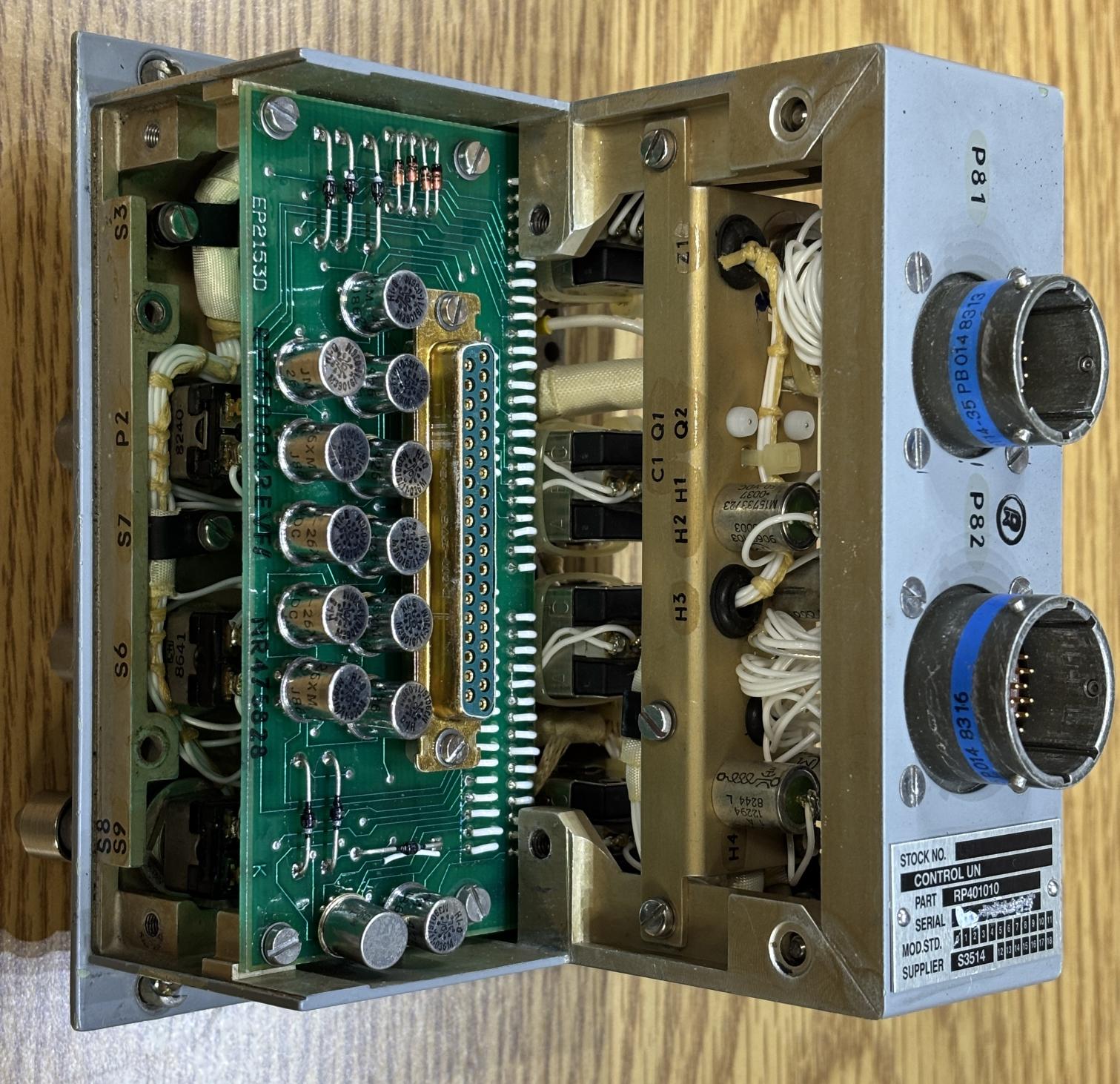
Removing the top and bottom covers reveals another example of high-quality, traditional avionics electronic wiring. Using nothing but white jacketed wire, the Korry-style switches and indicators are connected together, some through EMI feedthrough filters, and to the rear connectors as well as the internal 37-pin D-SUB connector. On a board located behind the toggle switches are several sealed metal can relays. These are actuated by a microcontroller to control the 28V incandescent indicators within the Korry switches. There is also a stud diode mounted to the same bracket as the feedthrough filters.
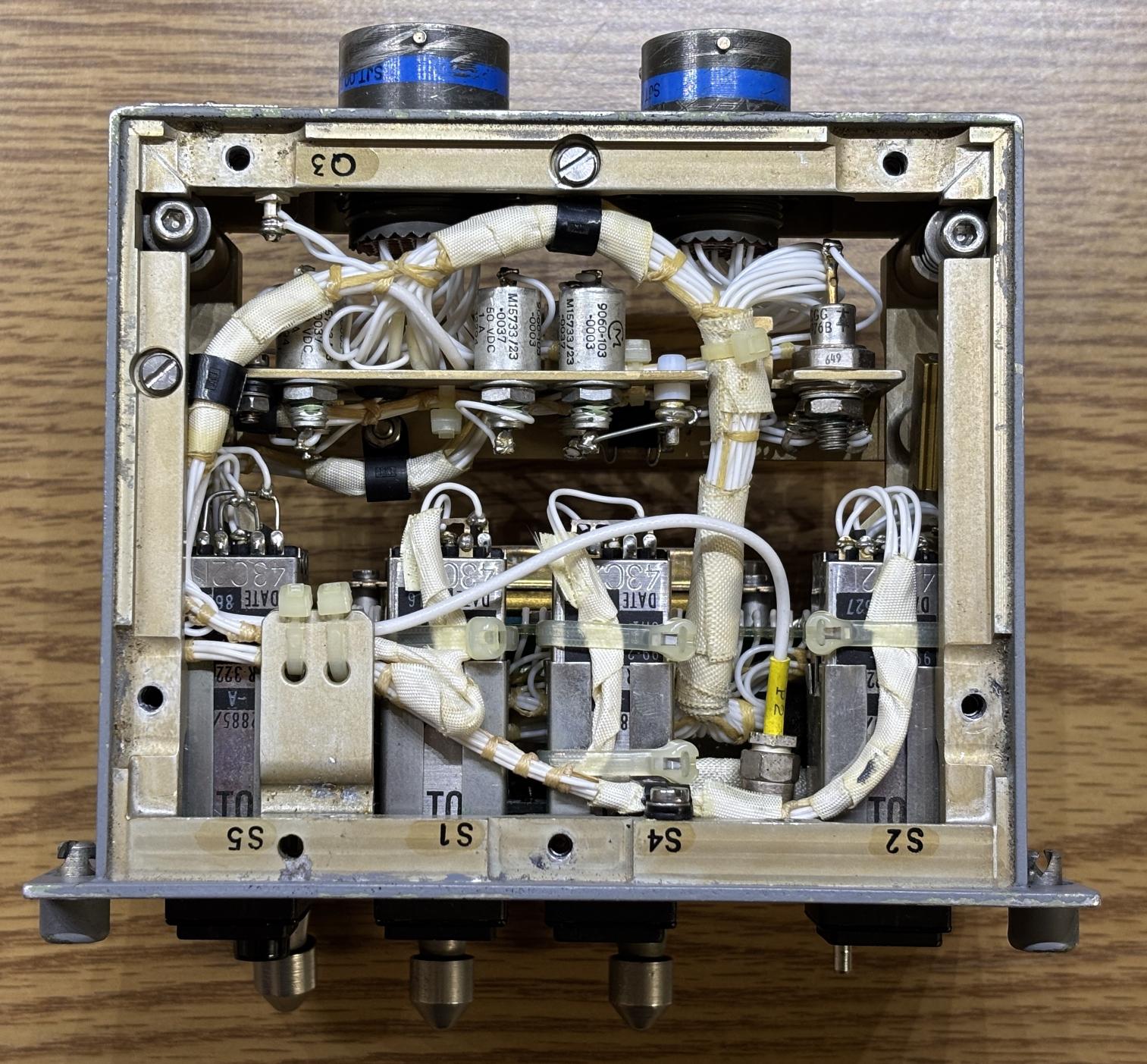
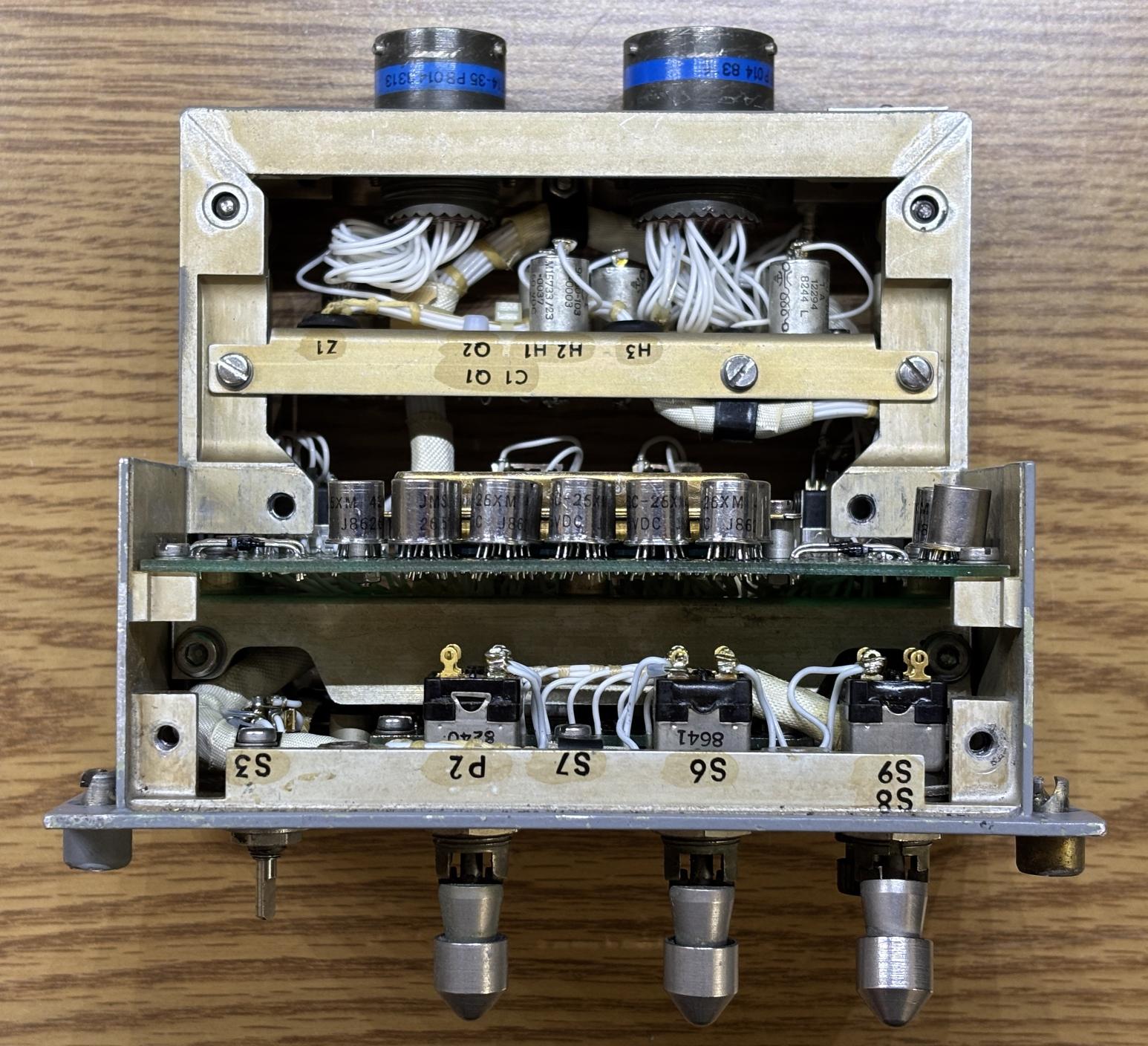
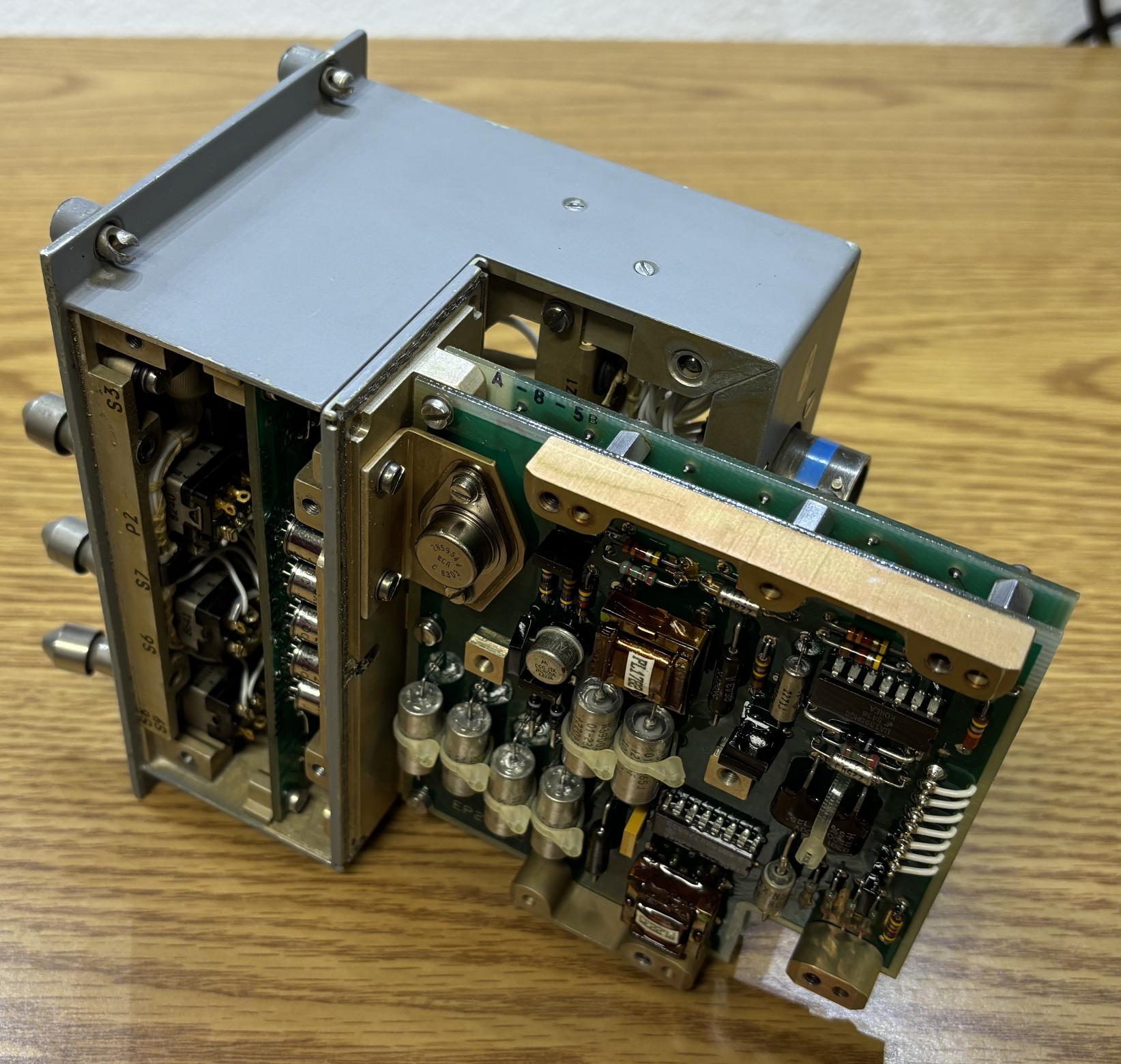
Here are two images of the assembly, one with the digital board removed (left) and one with it installed (right). On the left you can see the relay board and 37-pin connector. On the right, the digital board is installed, it mates to the 37-pin connector and is secured to the other enclosure section via some screws. The metal shroud that encloses the digital board has an EMI shielding gasket to minimize interference and leakage.
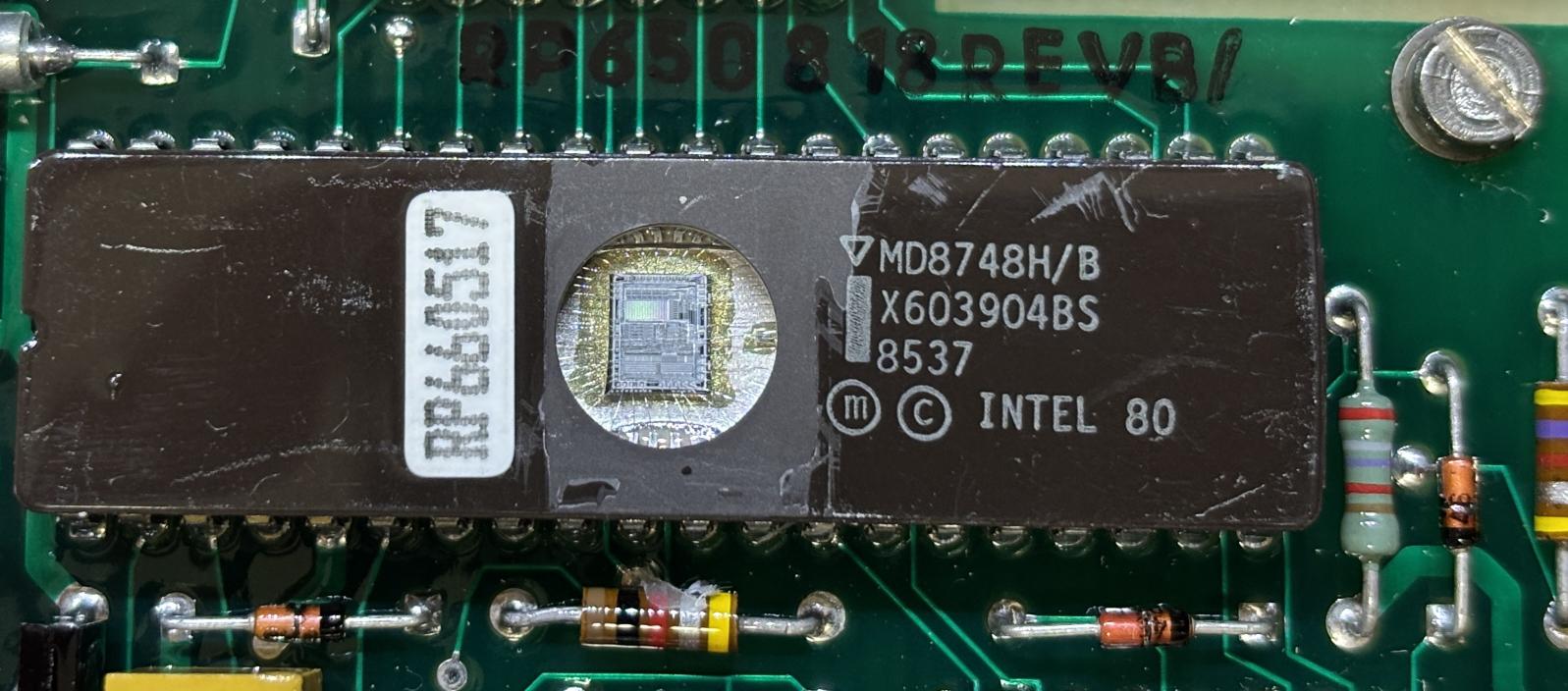
On the left is the power supply board, labeled EP2160C. On the board are several resistors, capacitors, diodes, two small transformers, a metal-can transistor (2N2905A), and some ICs (SG1524J & UA139DM). There is also a larger standalone transistor in the top corner (RCA 2N5954). On the right is a much more involved digital board labeled EP2134E, centered around an Intel MD8748H/B 8-bit microcontroller. It has built-in ROM which explains the window and sticker (revealed at the end of this page). Other notable components are several DALE MDP1603 resistor networks, an LM139J comparator, a JM38510 flip-flop, and a 3.6 MHz crystal oscillator. This board is most likely responsible for driving the seven-segment displays.
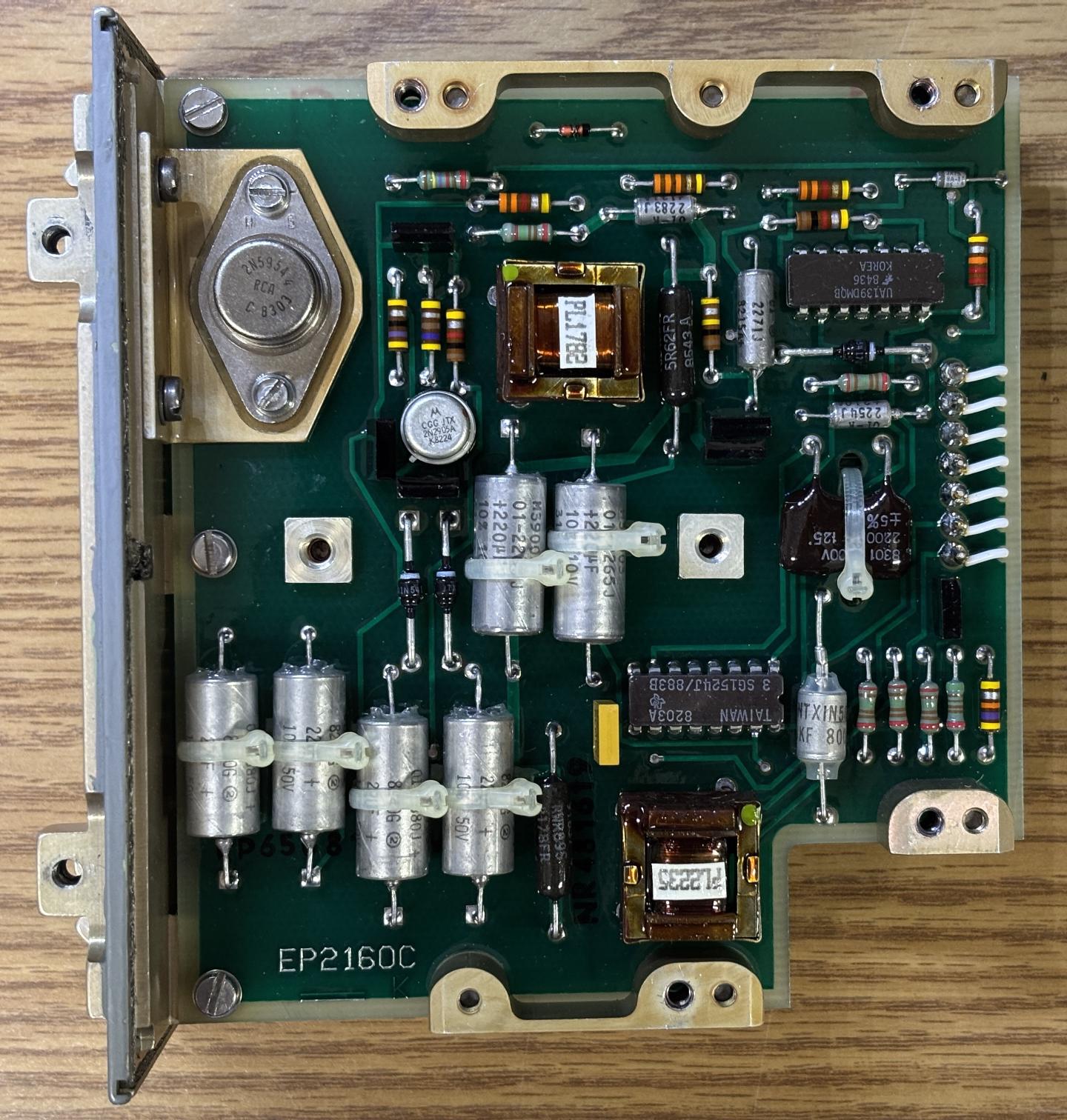
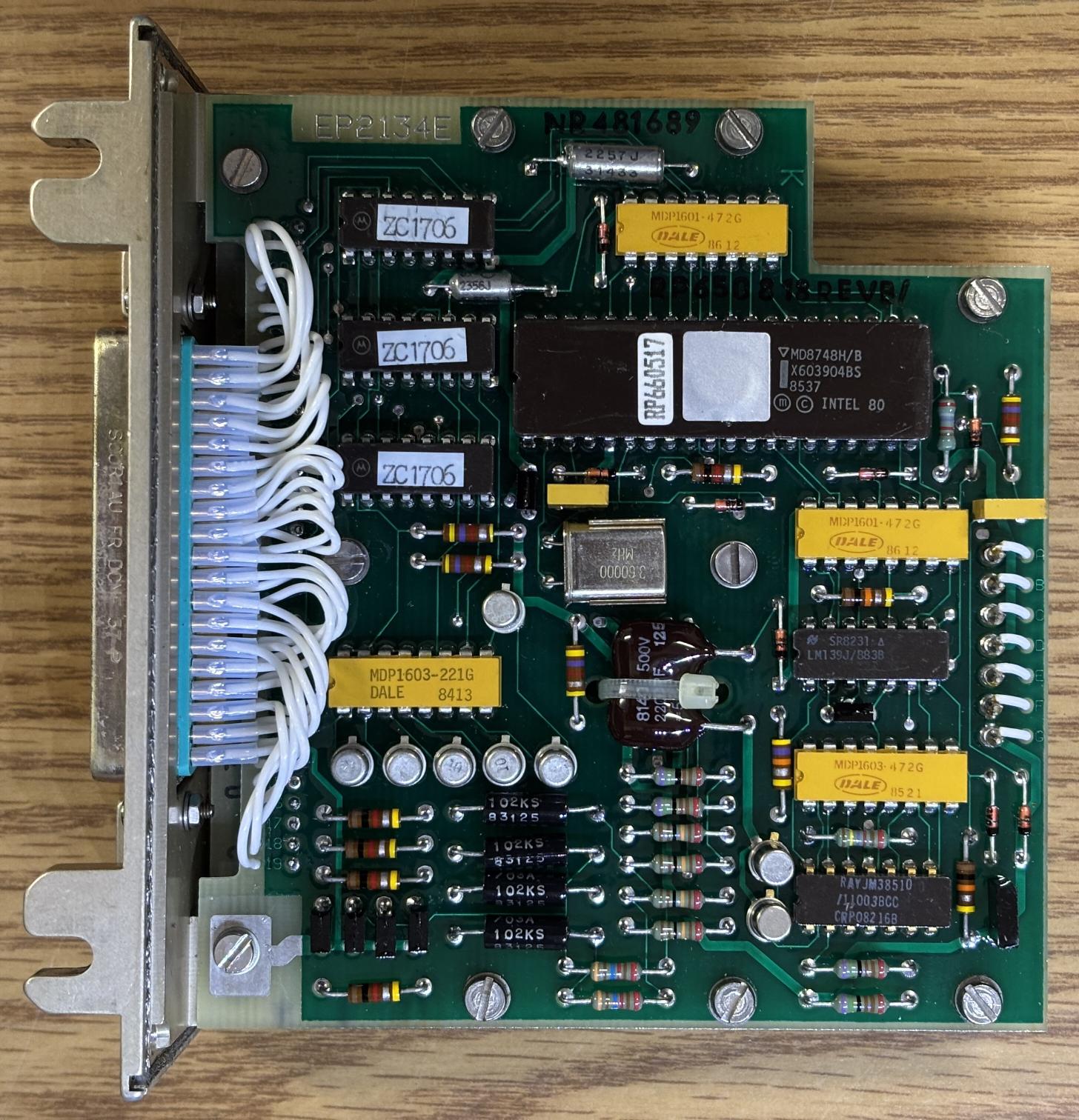
The digital board uses a 37-pin D-SUB connector manufactured by Souriau to interface with the remainder of the electronics within this module. The two boards are connected together via 7 individual wires that cleanly route between the boards and are directly soldered to pads on the surface.
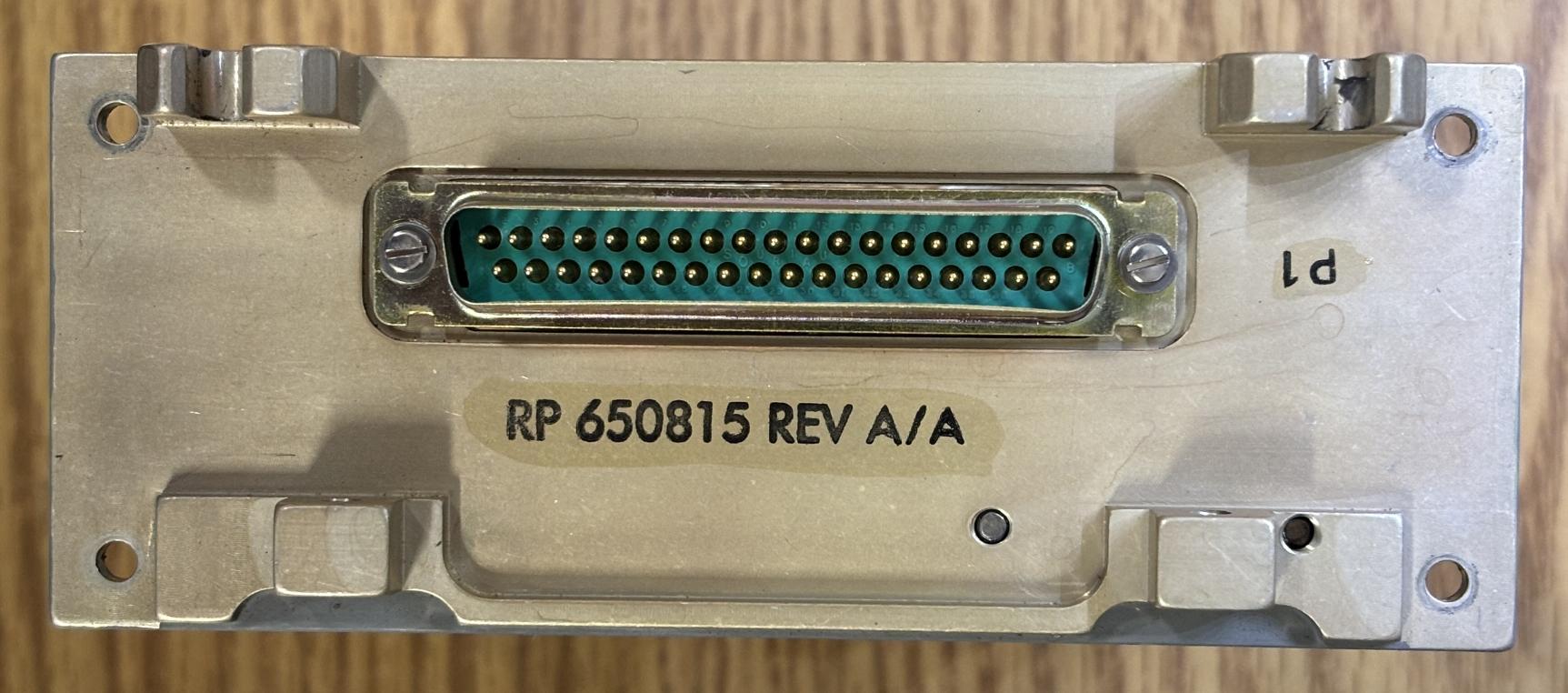
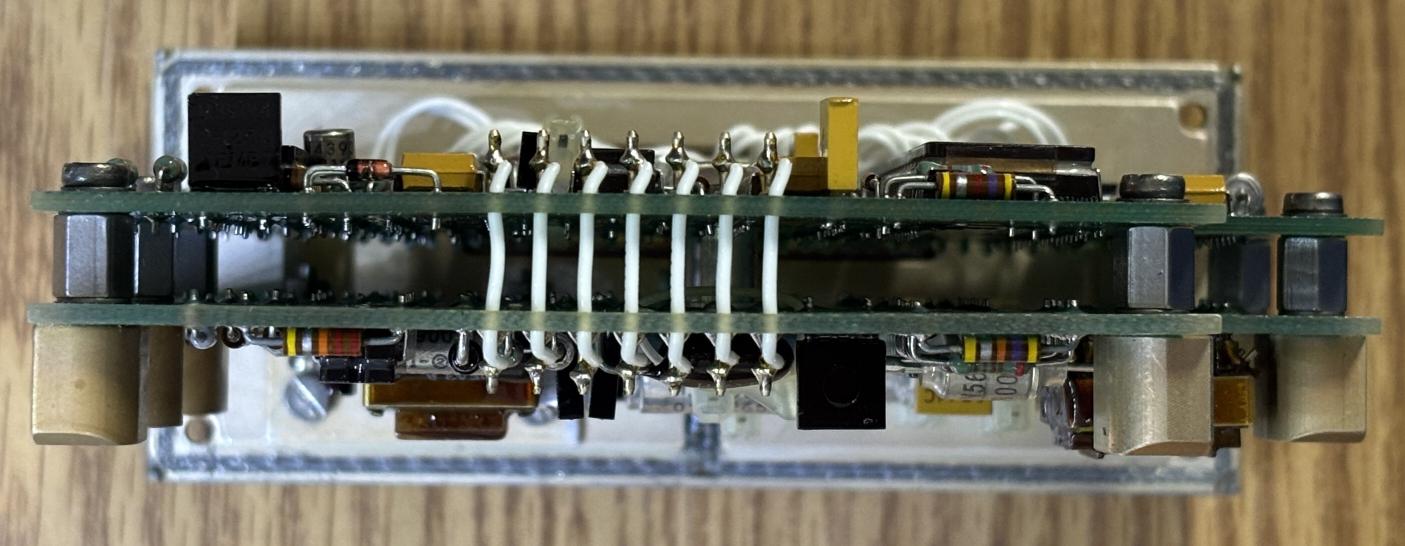
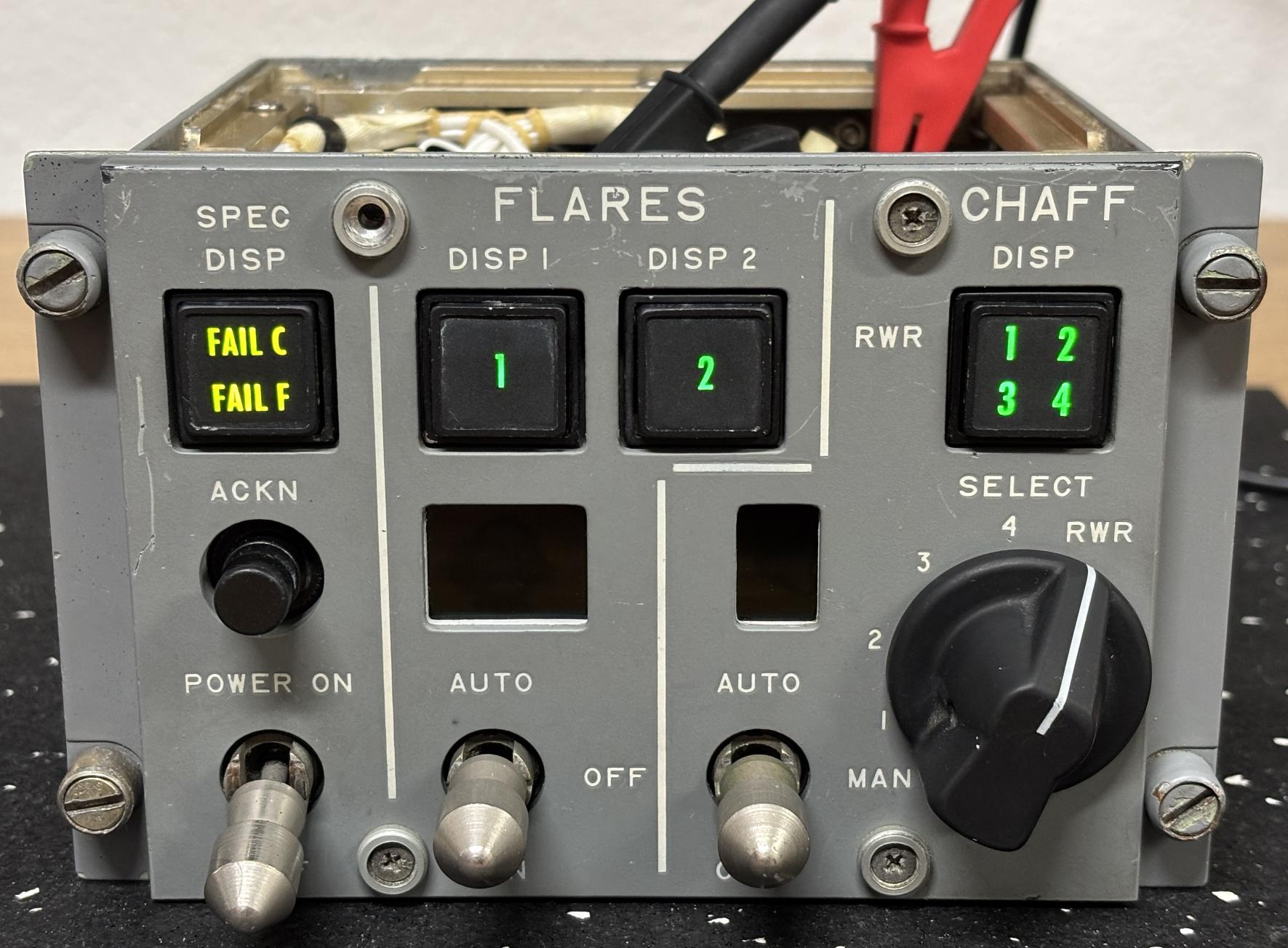
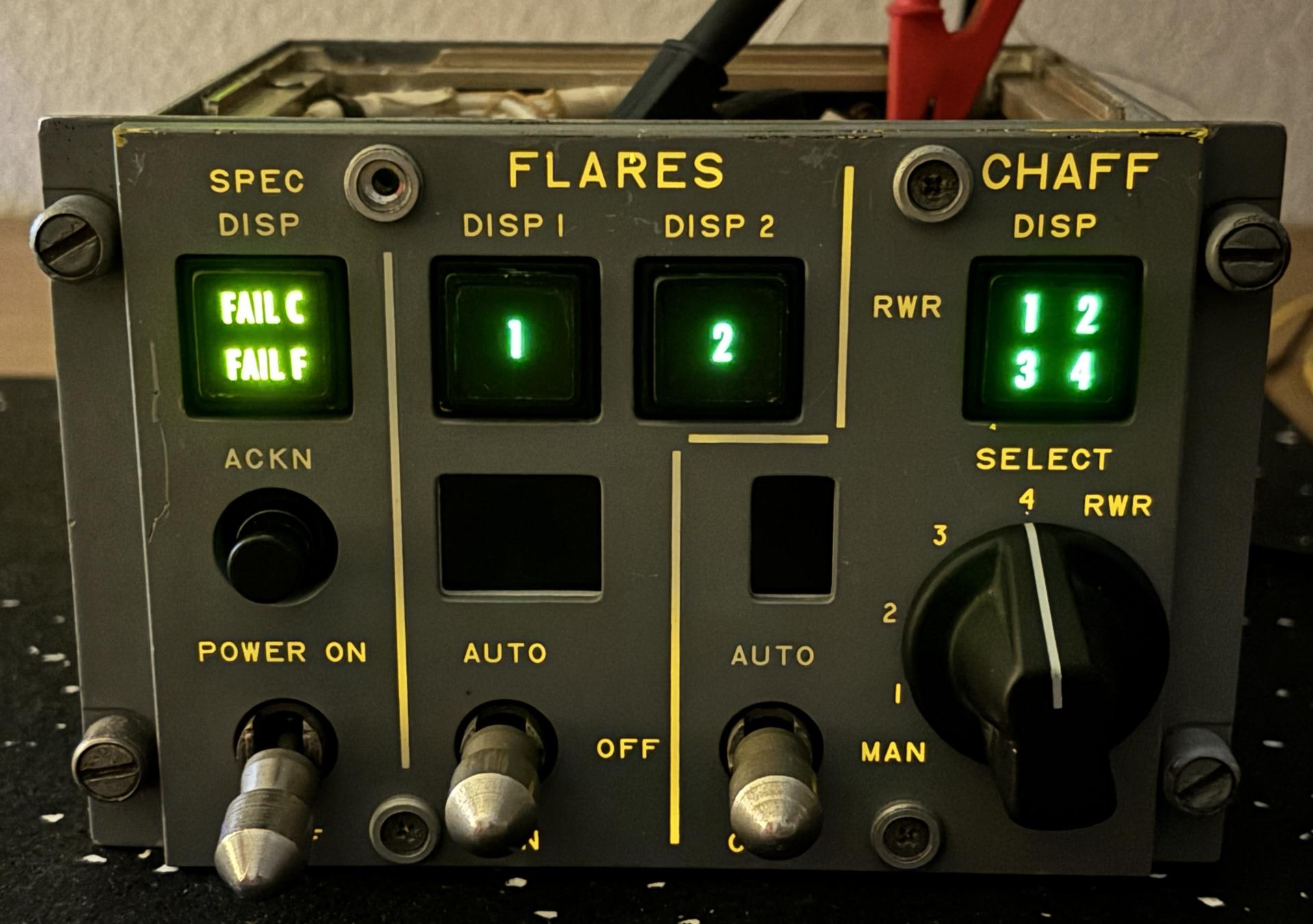
Due to time constraints, we did not decipher the pinout for the rear connectors and have not yet completely powered the unit up. However, we were able to apply 28V DC directly to the lamp test circuit for the Korry indicators using some alligator clips. This caused the pushbutton indicators to illuminate. Interestingly, there are two distinct shades of green used. Much like other avionics, the Korry pushbutton switches incorporate very small incandescent bulbs to illuminate the indicator text. In the image on the right, we were able to power on the backlight using 115V AC, but it is quite dim even at the maximum rated voltage. The image was taken using night mode, which makes it appear brighter and more yellow than it is in person.
We scraped the conformal coating and sticker off the Intel MCU to reveal a very nice silicon die under a window, much like a windowed EPROM.
Follow the links below to learn more about the countermeasures and systems that this panel controlled.