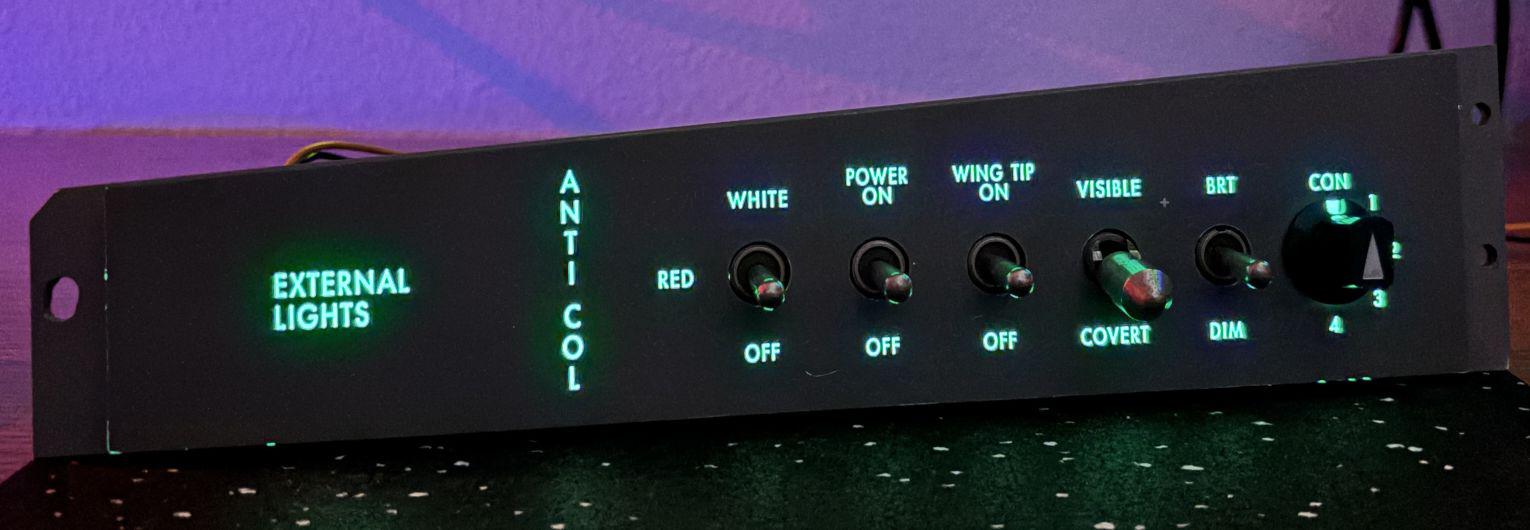
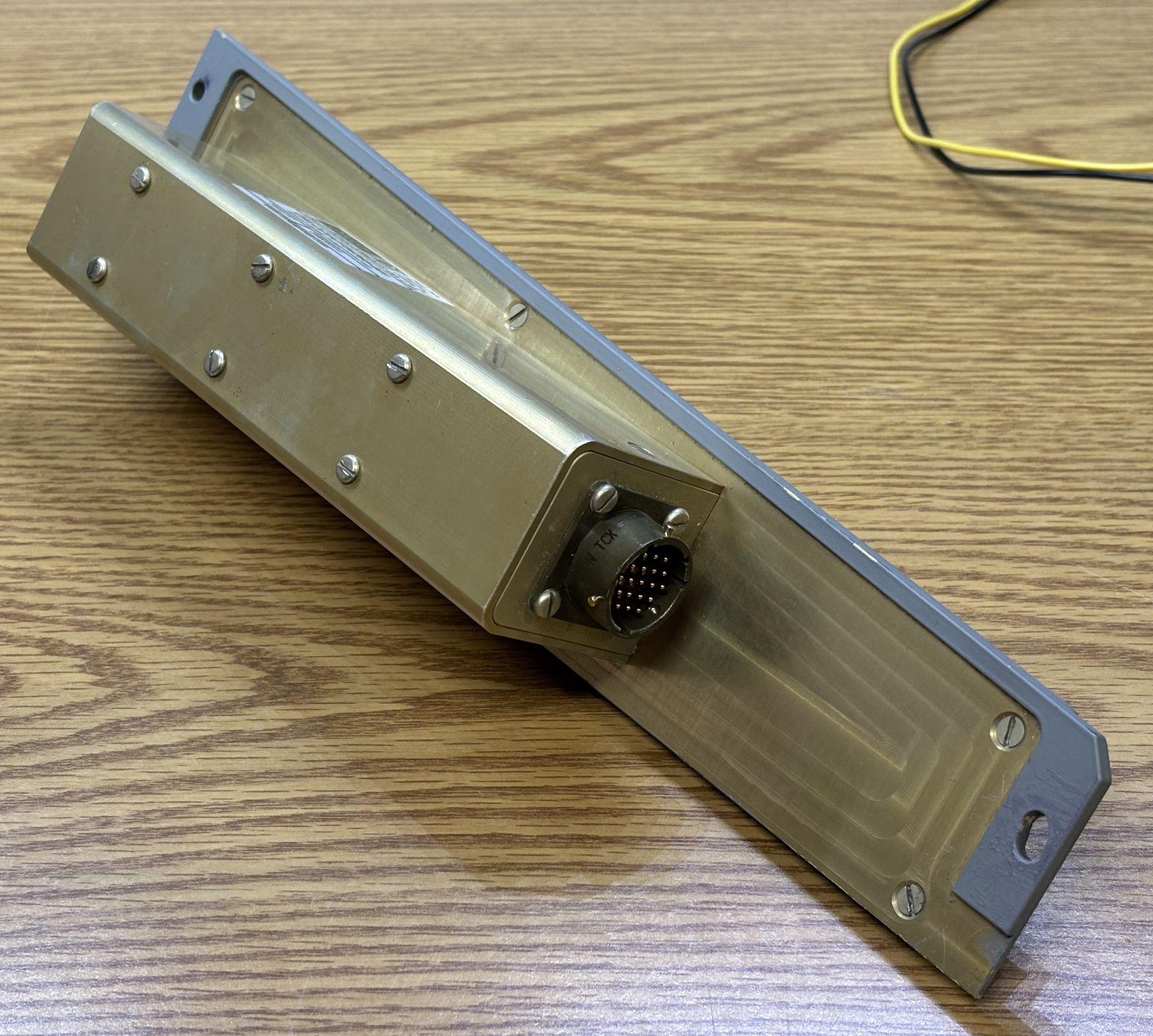
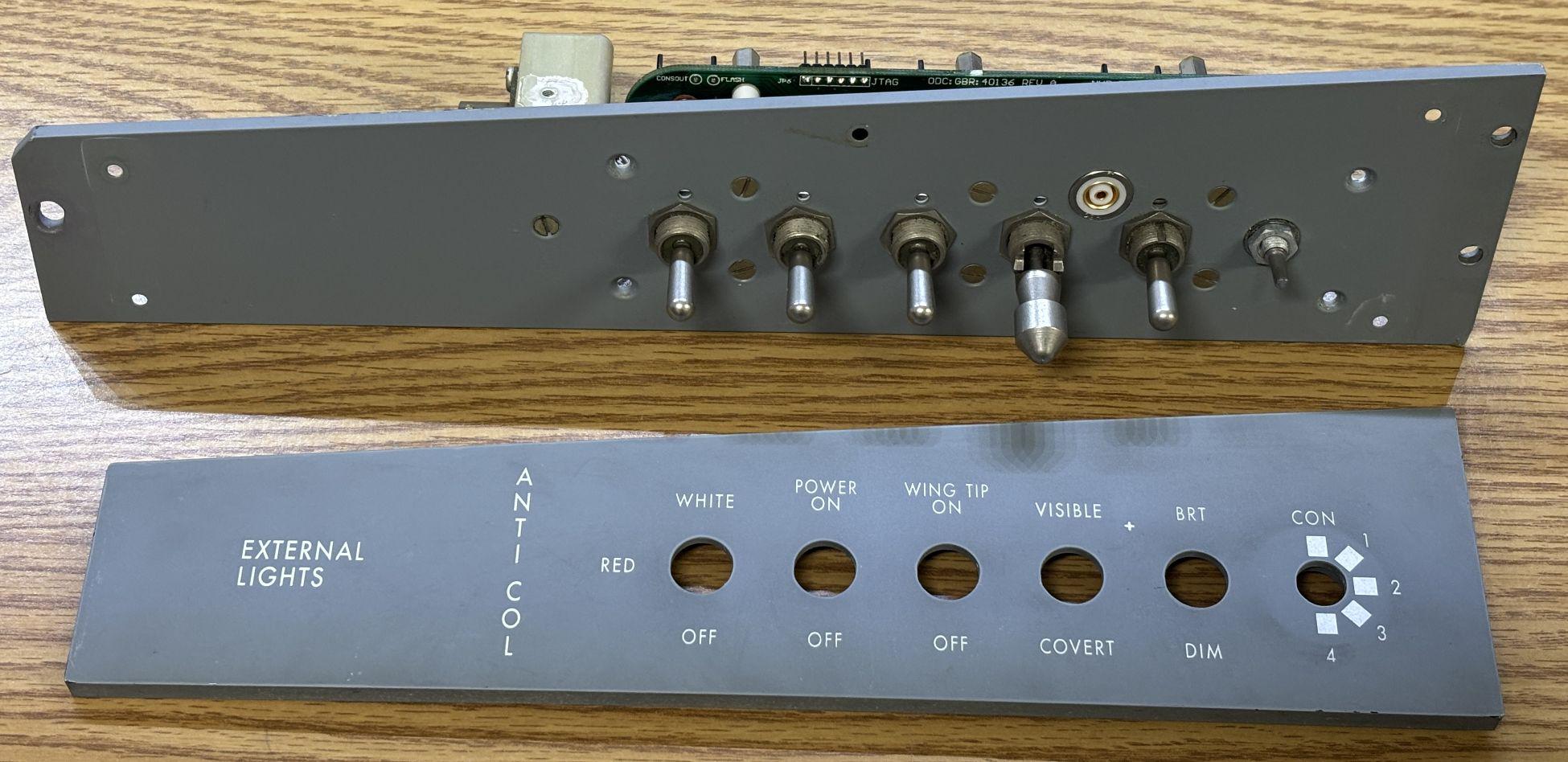
This lighting control panel, manufactured by Oxley Group would have been mounted in the cockpit of a Panavia Tornado GR4 aircraft. It is used to control the external lighting on the aircraft, such as marker lights and anti-collision lights. On the surface, this is a rather mundane component. However, once the unit is disassembled it becomes more interesting. The panel is integrally lit and has 5 toggle switches and 1 rotary selector.
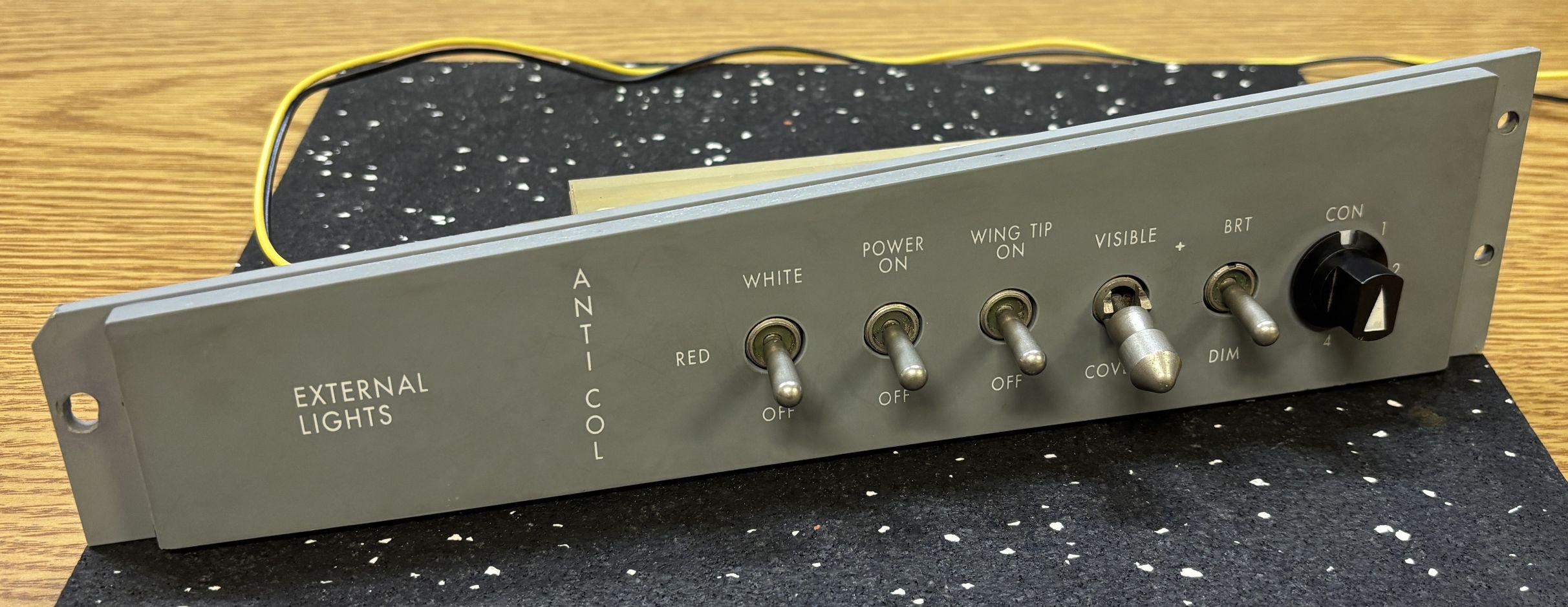
A list of the switches along with descriptions is provided below. The complete accuracy cannot be guaranteed to due to the lack of available information.
- ANTI COL (OFF/RED/WHITE): Enables and changes color of anti-collision lighting
- POWER (OFF/ON): Enables power to external lighting system
- WING TIP (OFF/ON): Enables wing tip lighting
- VISIBLE/COVERT switch: Used to limit or disable lighting during stealth operations
- BRT/DIM switch: Changes lighting brightness
- CON rotary selector switch: Could adjust lighting configuration such as flash patterns, or may be related to "condition" and change lighting behavior accordingly
The panel is made of a flat section of milled aluminum with the front, panted side exposed to the cockpit. The rear of the panel is mostly unpainted and has a rectangular metal enclosure secured to the flat section.
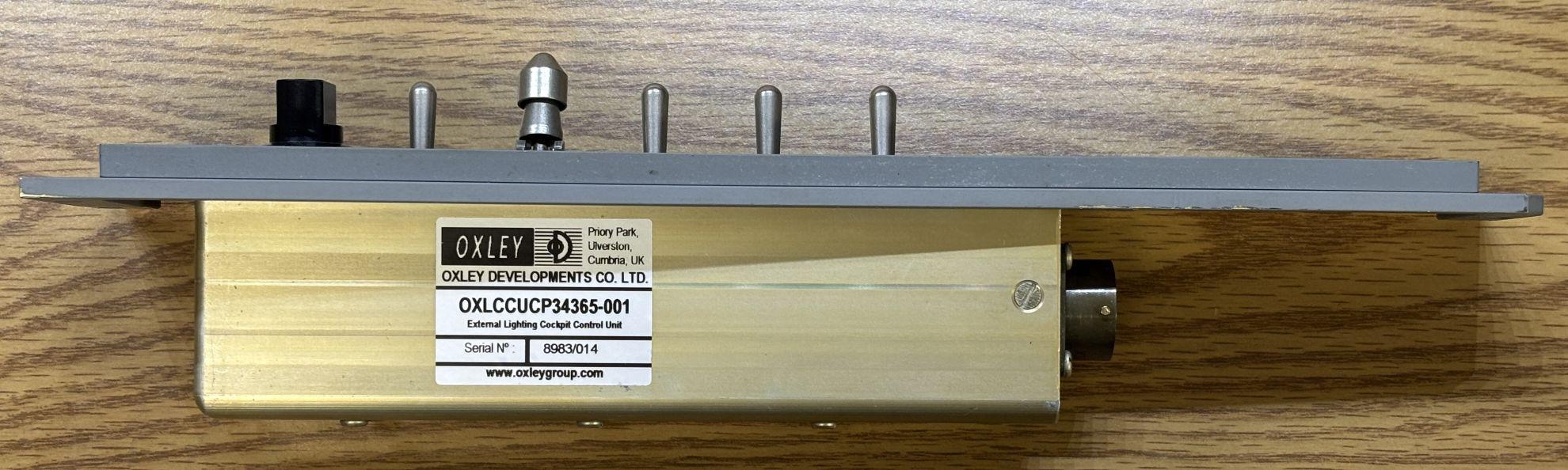
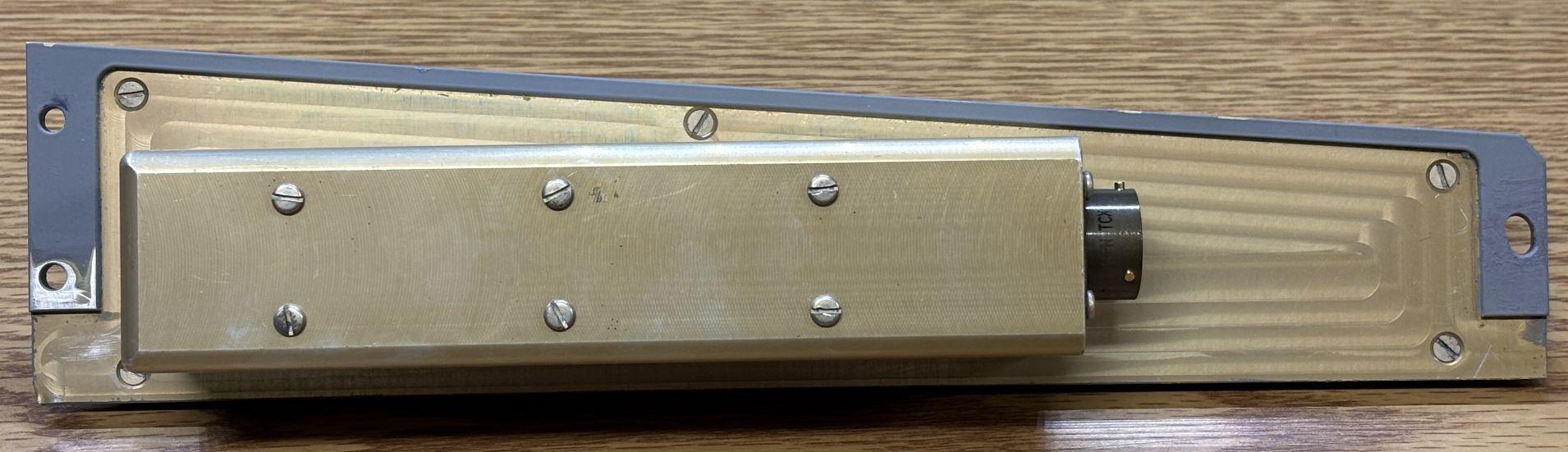
There is a single 19-pin twist-lock connector that protrudes from the side of the rectangular enclosure. It is mounted to its own piece of aluminum independent of the enclosure. The enclosure also appears to be milled from a solid block of aluminum. There are 7 slotted screws on the back of the cover. 4 slotted screws must also be removed from the front side after removing the illuminated plastic panel. Only then can the milled aluminum cover be removed, exposing the internal electronics.
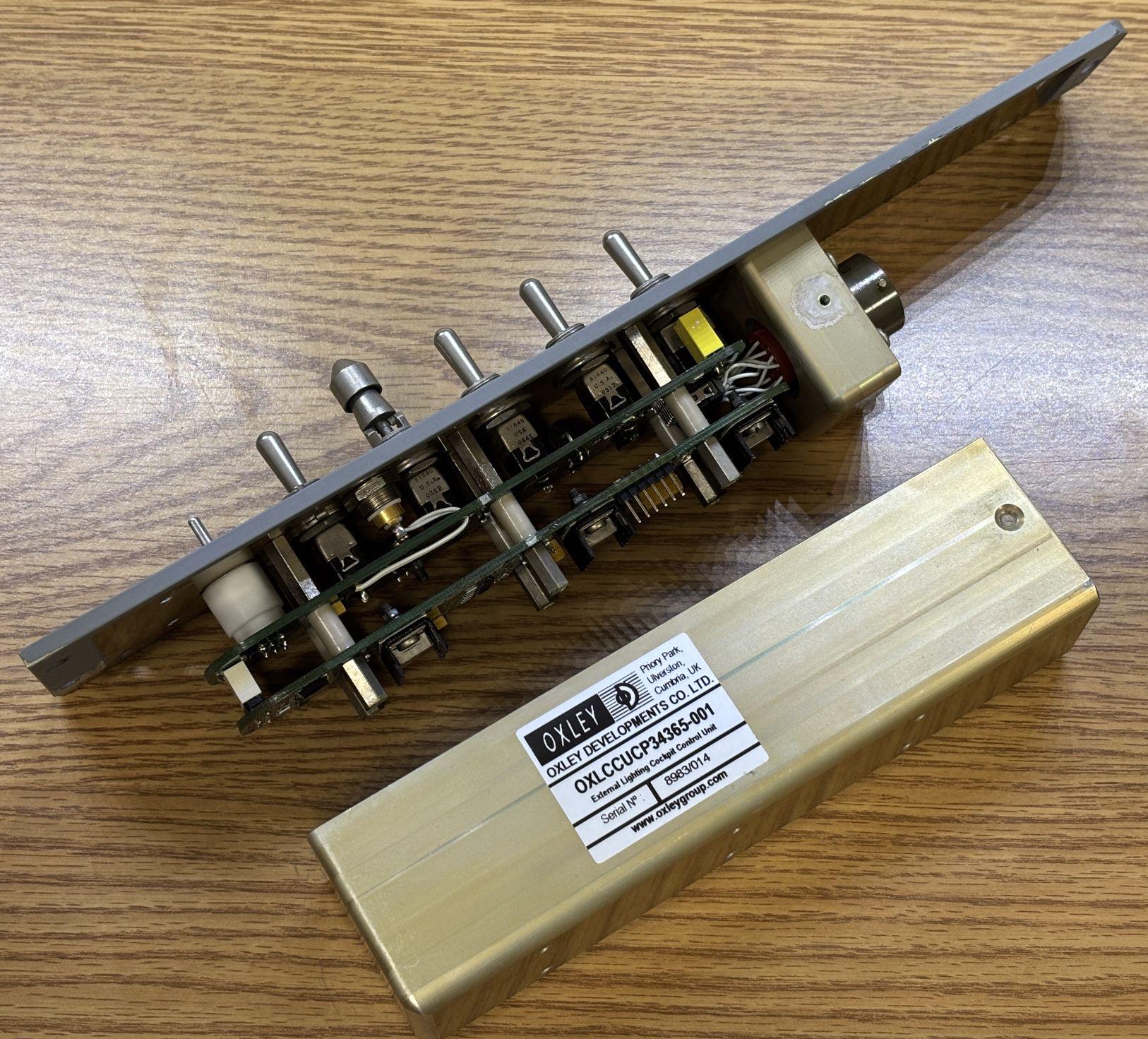
We expected this to just be a panel of switches with little to no active circuitry. As mentioned earlier, we were quite wrong. Hidden behind the aluminum cover are two circuit boards mounted to the flat section of aluminum via several standoffs. The boards are interconnected via a dual-row pin header.
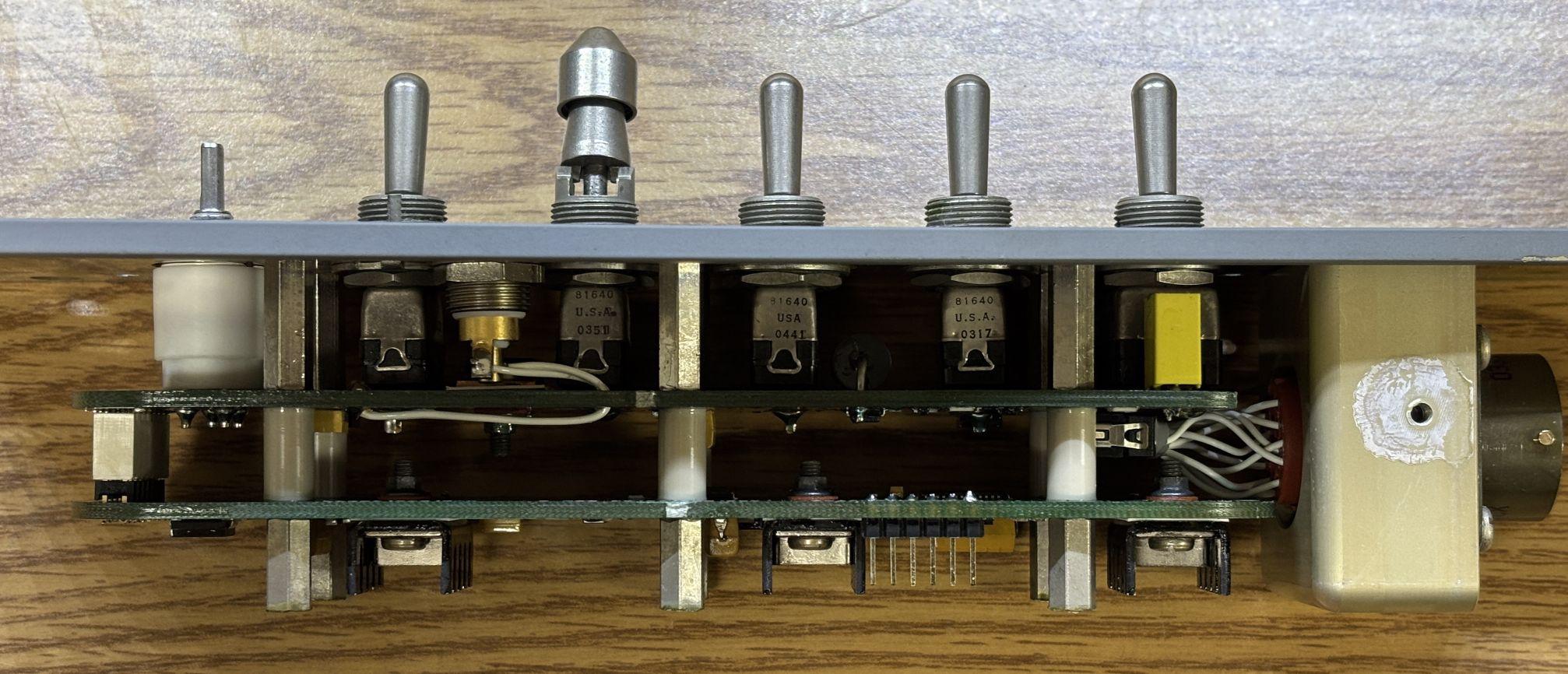
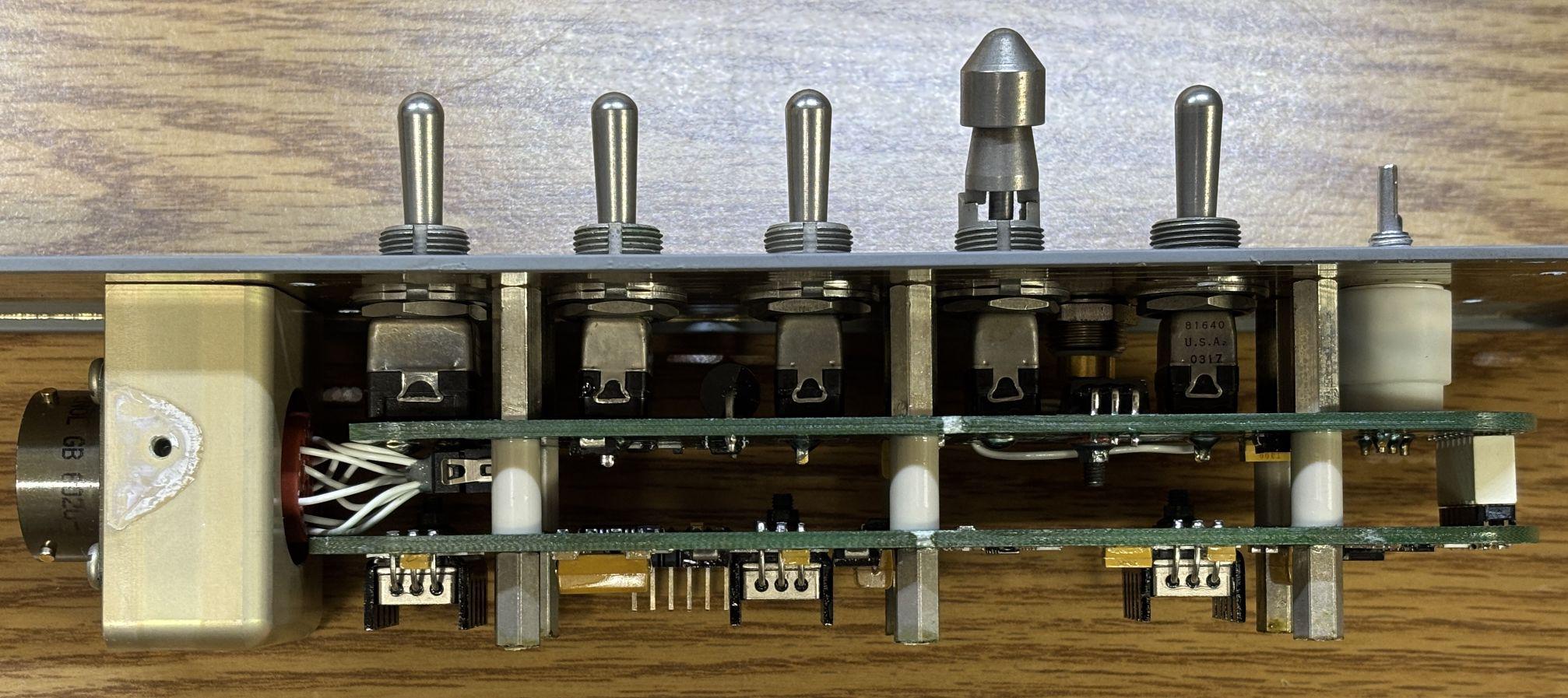
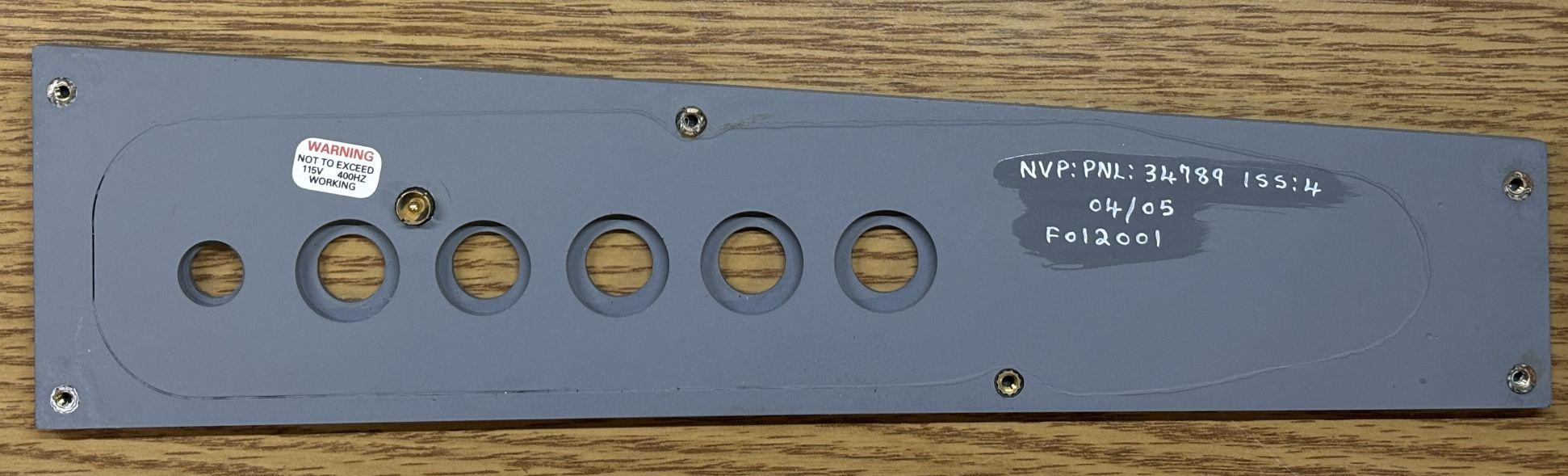
Before we continue, let's take a brief look at the illuminated plastic panel that faces the pilot in the cockpit. This is very similar to many other illuminated (integrally-lit) cockpit panels. It's a painted, translucent, plastic panel with etched sections for text and symbols. Most of these panels have tiny incandescent bulbs contained within as the light source, but this panel uses electroluminescence, which is significantly more exotic. This makes sense especially after noting the warning label that explains a working voltage of 115V AC 400 Hz. We thought that was quite high for panel illumination, but electroluminescence does require higher voltages, so it makes sense. Also, 115V AC 400 Hz is a common voltage and frequency combination that is already present in many aircraft models. The illuminated panel receives power through a plug that inserts into a concentric-pin type socket.
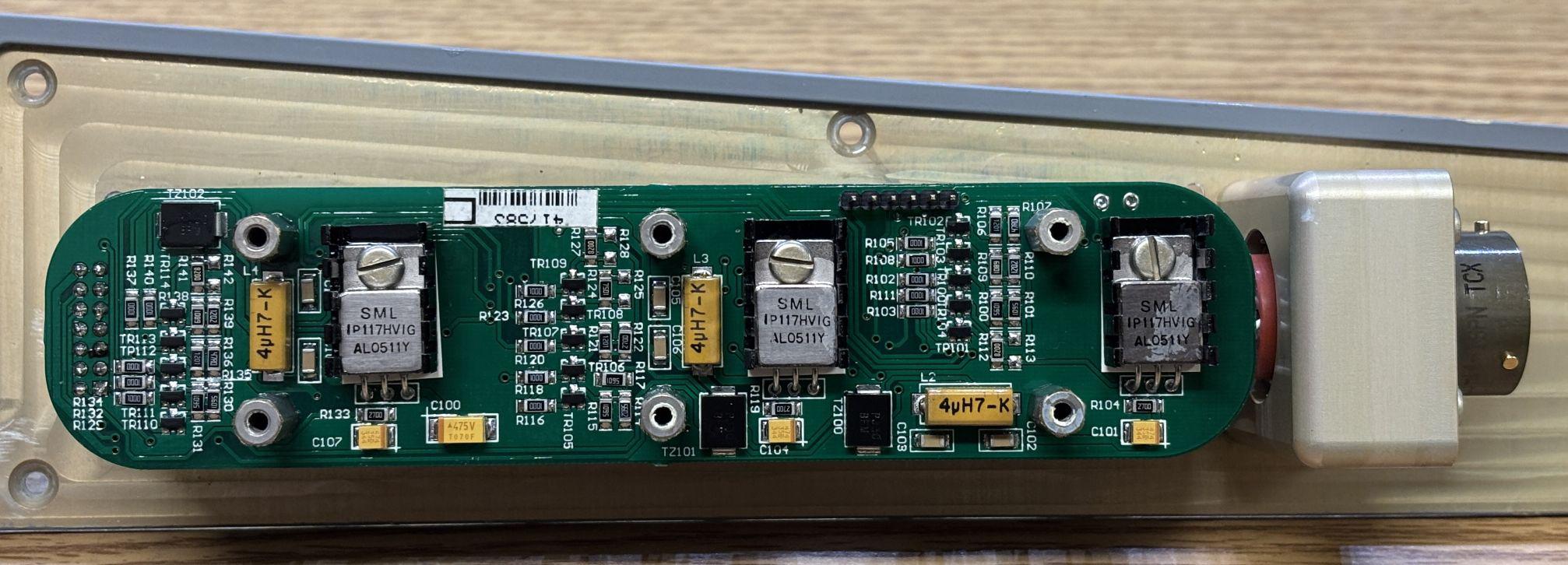
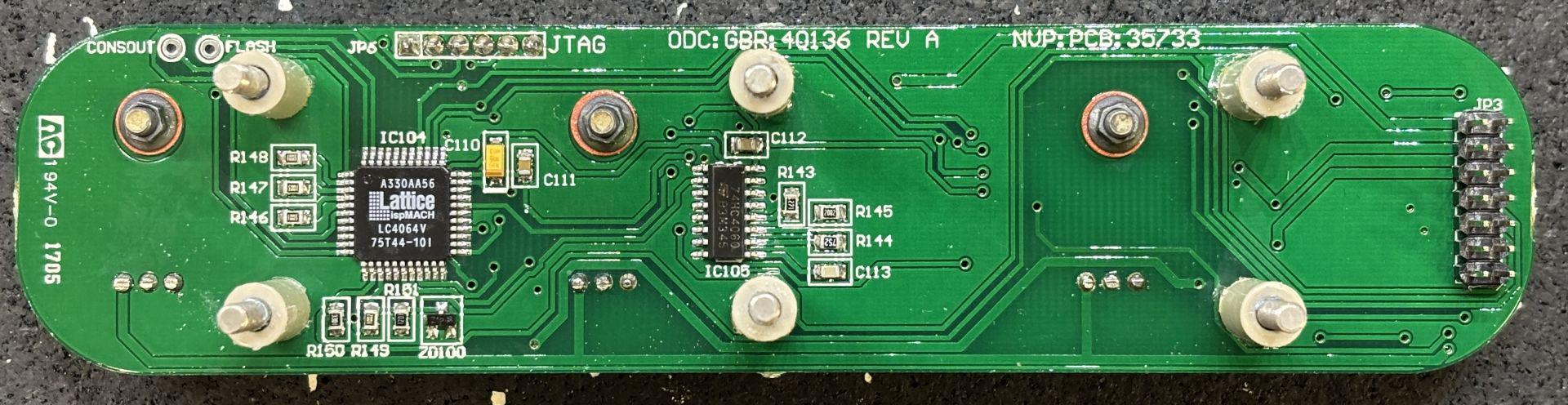
The first board is pictured below. There's quite a bit going on here. Starting with the back (left image), there are numerous surface-mount components, indicating relatively recent construction. Most notably, are 3 SemeLAB/TT Electronics IP117HVIG positive adjustable voltage regulators. These devices are not just any voltage regulator as they feature a hermetically-sealed, isolated case (TO-257AA package). Devices like this with such extreme features often fall into mil-spec, high-temp, and even space-grade categories. Each regulator is mounted to the board with a small heatsink in between. On the front (right image) of this board, things get even more interesting. There is a Lattice ispMACH LC4064V CPLD. A CPLD (complex programmable logic device) allows custom digital logic to be implemented efficiently without using numerous discrete components or designing a custom ASIC (application-specific integrated circuit). The device can be programmed to emulate discrete logic while being more reliable than firmware on an MCU. It's an interesting choice for an application like this. We suspect that this control panel is operating the external lighting directly, or perhaps driving an amplifier of some sort. That would explain the logic. Since it's a simple, but critical task, a CPLD makes sense to cut down on components and complex design while ensuring reliability. The test-points labeled CONSOUT and FLASH on the left corner of the board are used for programming/debugging the CPLD. Interestingly, the 5-pin header on the back of the board (JP6) is labeled JTAG, which is directly related to the programming and debugging of the chip as well. Also on this board is a surface-mount 74HC4060 14-stage binary ripple counter with oscillator. This may be used in conjunction with an external clock signal to control lighting flash timing. Lastly, on the far right side is a dual-row pin header (JP3) that connects to the other board.
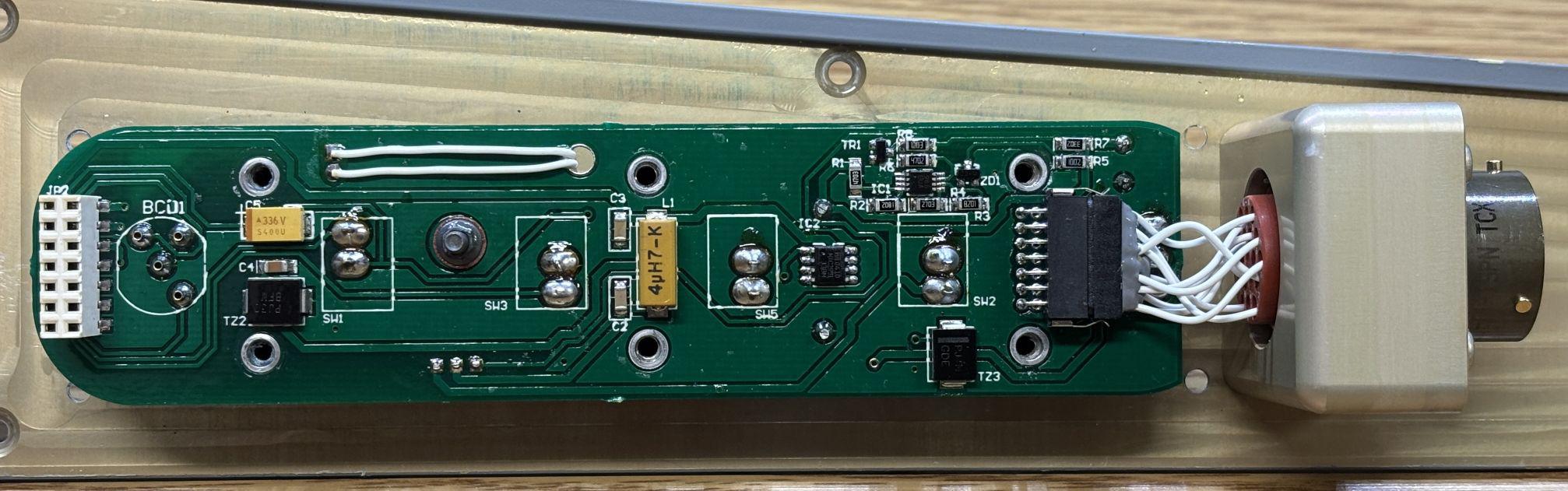
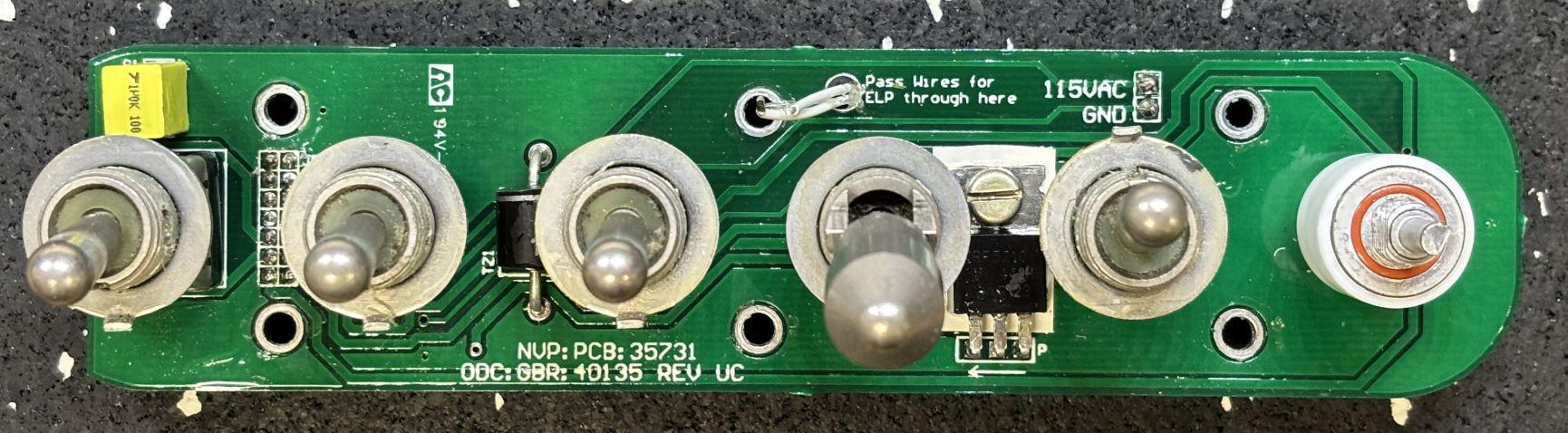
This boards mounts between the aluminum front panel and the additional board mentioned above. It is secured by standoffs and the retention rings of the switches that are soldered directly to it. It also has a socket and short wire harness for the multipin twist-lock connector. There are a few SMD components on the back (left image) of the board along with some wires for the lighting connector. On the front (right image) of the board are the switches themselves, a large diode, and a single IRF5210 p-channel MOSFET. The text that reads "Pass Wires for ELP through here" is how we arrived at the conclusion that the illuminated panel uses electroluminescence.
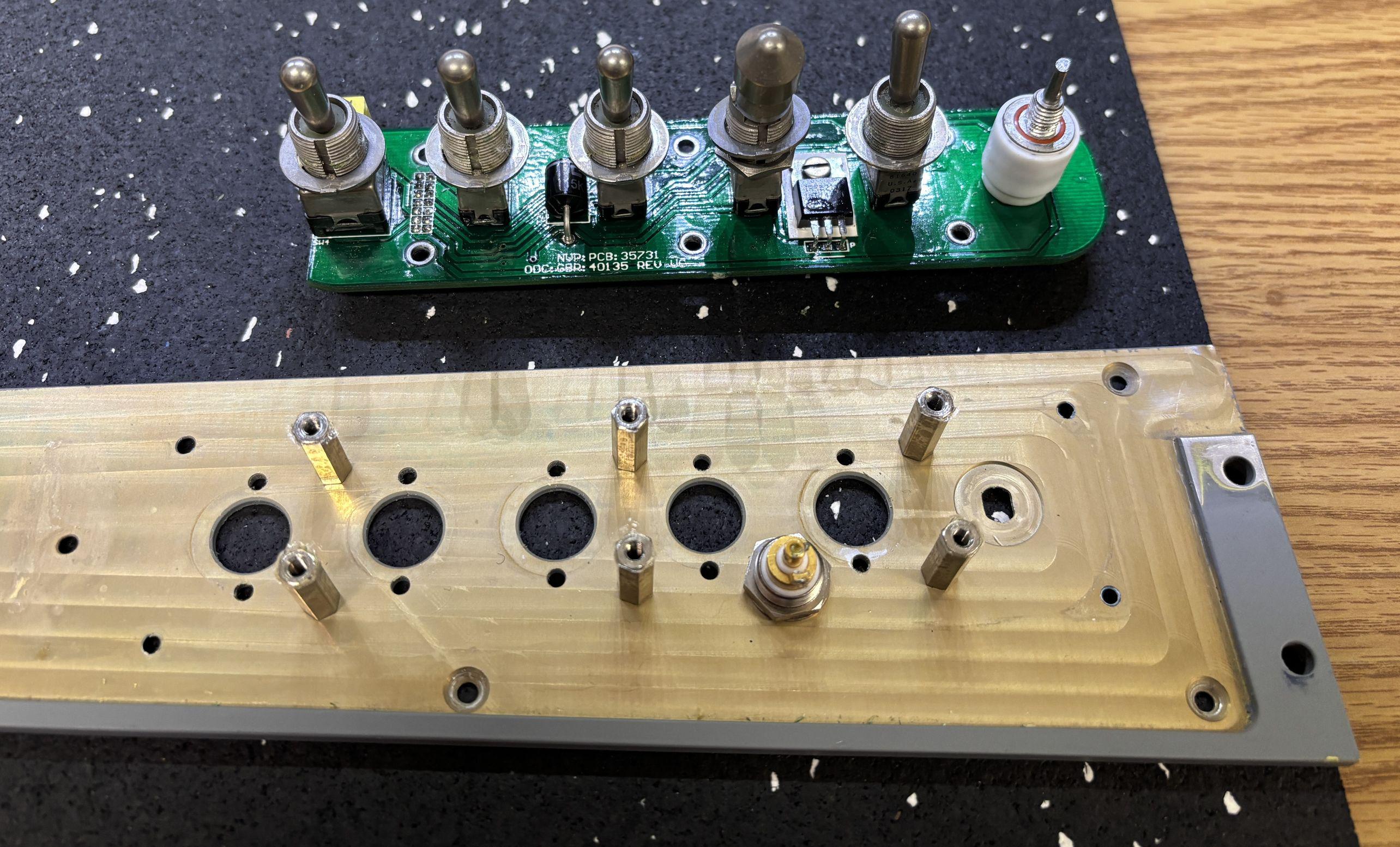
Here is a picture of the front aluminum panel with the switches and backlight connector wiring removed. Only the metal panel and standoffs remain. The switch board was placed above for reference.
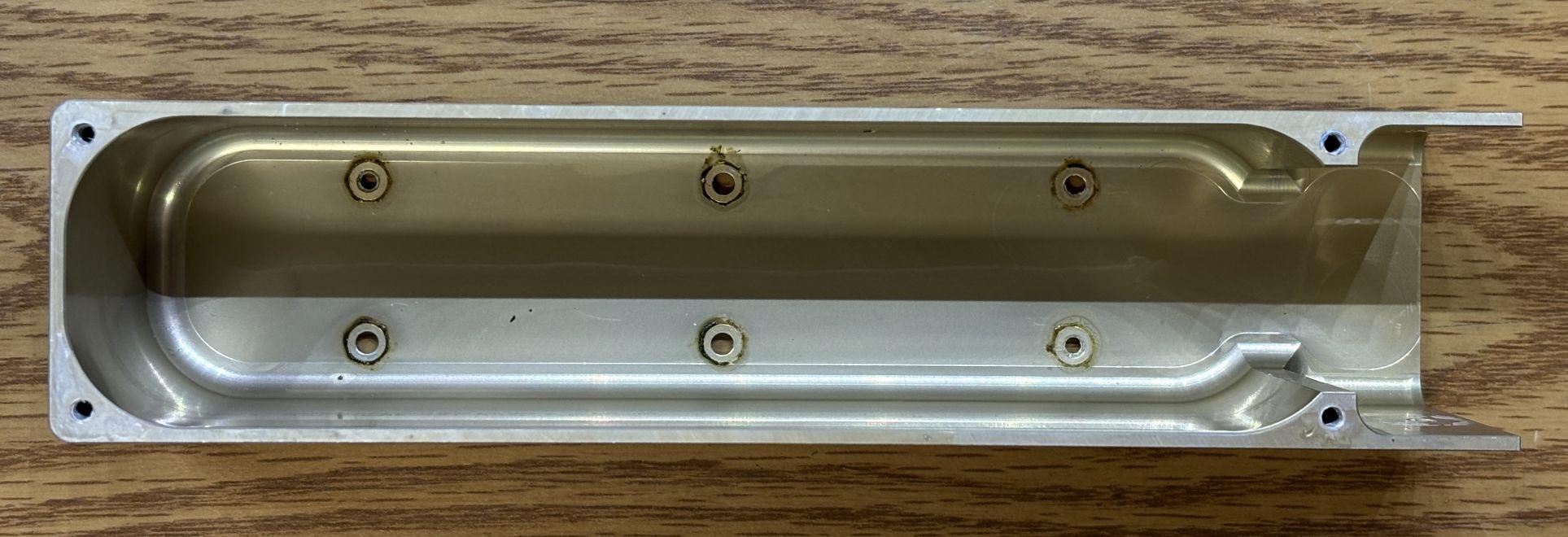
Here is the inside of the milled aluminum cover. Likely quite an expensive part to manufacture.
Applying 115 VAC 400 Hz to pins C and E of the connector illuminates the backlighting. It's a very interesting shade of green that is not very bright, but certainly adequate in dark conditions. Please note that the image below was taken with a camera with night mode enabled, so it looks brighter and more vibrant than it does in person.